

Chinese Nationals Caught up in Midway Blitz
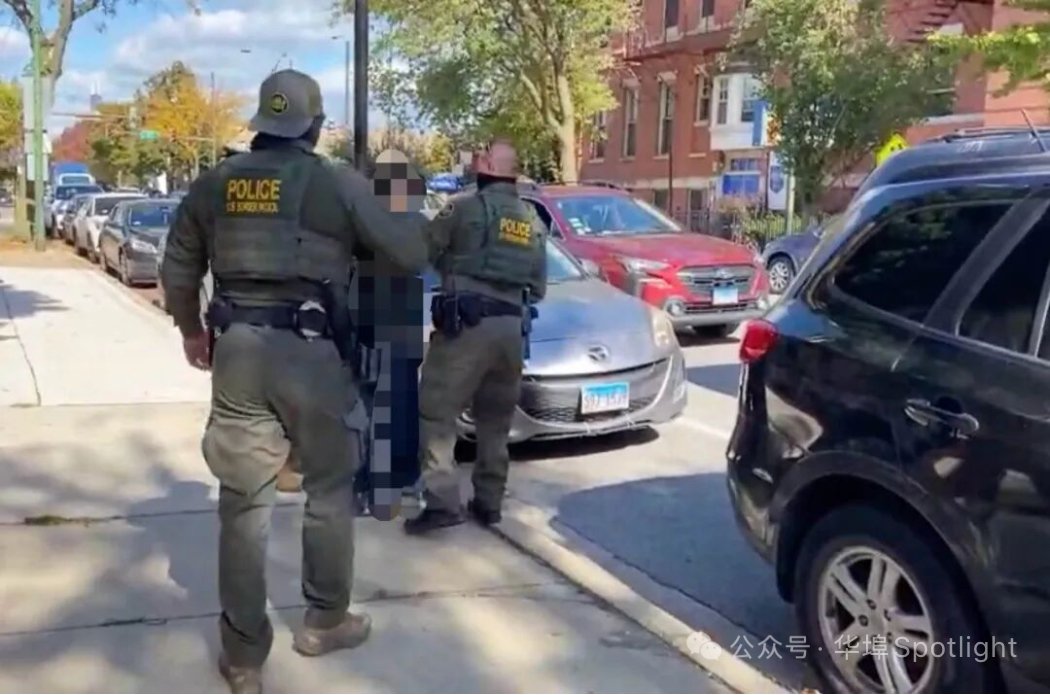
On the afternoon of October 23, an asylum seeker from China was arrested by immigration enforcement officers outside their home in Bridgeport.
Courtesy of Bridgeport Rapid Response Team
How to explain all this to our children?
After 10 years of peaceful life in the U.S., the wife and mother were left not knowing how to comfort her frightened children — after her law-abiding husband was suddenly taken away at their doorstep by masked men without reason,
Chinatown Spotlight were able to verify that multiple Chinese immigrants have been arrested over the past two months in Chinese communities, such as Chinatown and Bridgeport. Across the Chicago area, many immigrant families seeking asylum are experiencing the same separation and helplessness.
On September 8, the Trump Administration announced Operation Midway Blitz targeting Chicagoland. The Department of Homeland Security (DHS) claimed that a large number of immigration agents would be deployed to Chicago and Illinois to “crack down on illegal immigrant criminals.”
DHS reported that by the end of October, around 3,000 people had been arrested in Chicago. Apart from about 100 disclosed arrests, the agency did not reveal details about the remaining detainees. However, growing evidence shows that those arrested are far from being the “criminals” that DHS wowed to target — many of them hold work permits, are awaiting asylum decisions, and have no criminal records or deportation orders.
Heavily armed immigration agents have been roaming Chicago neighborhoods, conducting ambush arrests. These federal officers have pointed guns at residents and even fired pepper balls, tear gas, and flashbangs into crowds. They have detained not only undocumented immigrants but also legal residents and even U.S. citizens, while threatening and attacking pastors, journalists, and elected officials.
Many of these moments have been captured in photos and videos. Yet beyond the fear of government overreach, a growing number of Chicagoans are filled with anger. People are taking action — protesting in the streets, turning their cameras on the officers involved in illegal arrests, and blowing whistles to warn their neighbors.
In the Chinese community, a Rapid Response Team made up of more than 100 residents has become active, with more joining their ranks every week. The Family Support Network Hotline (FSN: 1-855-435-7693), led by the Illinois Coalition for Immigrant and Refugee Rights (ICIRR), now also offers Chinese-language assistance.
Arrests at the Doorstep
At noon on November 6, at the corner of 30th Street and Union Avenue in Bridgeport, A. was washing his car by the roadside. A food delivery driver, he happened to have the day off and had just come back from grocery shopping.
A gray SUV pulled up beside him. Two masked men wearing olive-green tactical vests approached and began questioning his identity. Following their instructions, his family brought out his passport, Employment Authorization Document, and Social Security Card. After a brief inspection, A. was handcuffed and taken away.
A. came to the United States four years ago on a tourist visa. In 2022, he filed for asylum and is currently in the pending stage—still waiting for an interview or hearing. His family has recently paid a $100 asylum application fee, a new requirement introduced this year by immigration authorities to maintain legal status during the waiting period.
His family cannot understand why he was targeted and eventually arrested. “He has no criminal record. They didn’t show us any warrant. They said they were taking him to get fingerprinted and verify his identity, and that he’d be back in about 30 minutes.”
Twenty-four hours later, ICE’s online detainee locator confirmed that A. had been taken into custody by Immigration and Customs Enforcement (ICE).
According to the Chinatown/Bridgeport Rapid Response Team, at least three arrests took place in Bridgeport that day — including A., another Latino immigrant, and one additional Asian individual.
A nearly identical scene had played out two weeks earlier.
At around 12:30 p.m. on October 23, under a bright midday sun, B., a Bridgeport resident, stepped outside in a T-shirt to grab something from his car parked in front of his house. Suddenly, a gray SUV driving along Wallace Street stopped abruptly in front of his vehicle. Three men wearing olive-green vests marked “POLICE U.S. Border Patrol” surrounded him. Two of them were masked; one carried a taser, while the unmasked officer held an assault rifle.
The initial video footage doesn’t capture their conversation. A female driver stopped nearby, honking her horn repeatedly and shouting at the agents for brandishing a rifle in broad daylight. An argument broke out between her and the armed officer.
At first, B. didn’t seem to grasp the danger. He even tried chatting with one of the masked agents, pointing out that there was an elementary school right across the street. He had no reason to feel unsafe — it was a perfectly ordinary afternoon in front of his home, on a peaceful residential block in Bridgeport, the heart of Chicago’s Chinese community. People walk on Wallace Street as usual.
Soon, the agents began demanding identification. B. tried explaining in broken English that his ID was inside and he could go get it, but they pulled him back and refused to let him leave.
Neighbors rushed to the scene, recording video and shouting advice: “If they don’t have a warrant, you don’t need to show them your ID!”
The armed agent grabbed a woman who tried to intervene and shoved her forcefully aside. Another agent activated his taser, its harsh buzzing sound meant as a warning.
Moments later, B. was handcuffed and shoved onto the SUV. No warrant signed by a judge was presented, and no reason was given. He was taken away on the spot.
That day, B. was detained at the immigrant detention facility in Broadview in the western suburbs. The following day, he was transferred to a detention center 260 miles away in Michigan.
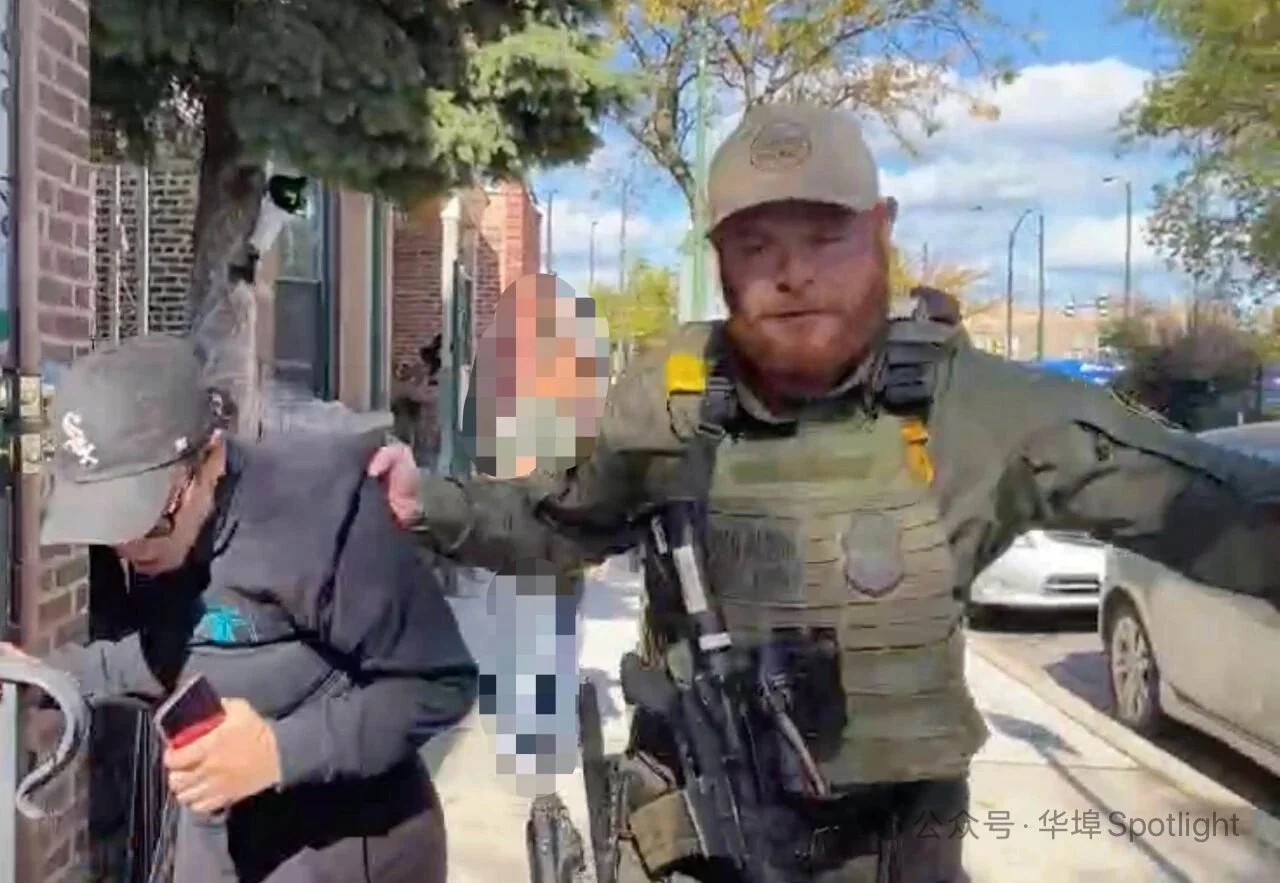
On the afternoon of October 23, immigration agents violently pushed back local residents on Wallace Street in Bridgeport.
Courtesy of Bridgeport Rapid Response Team
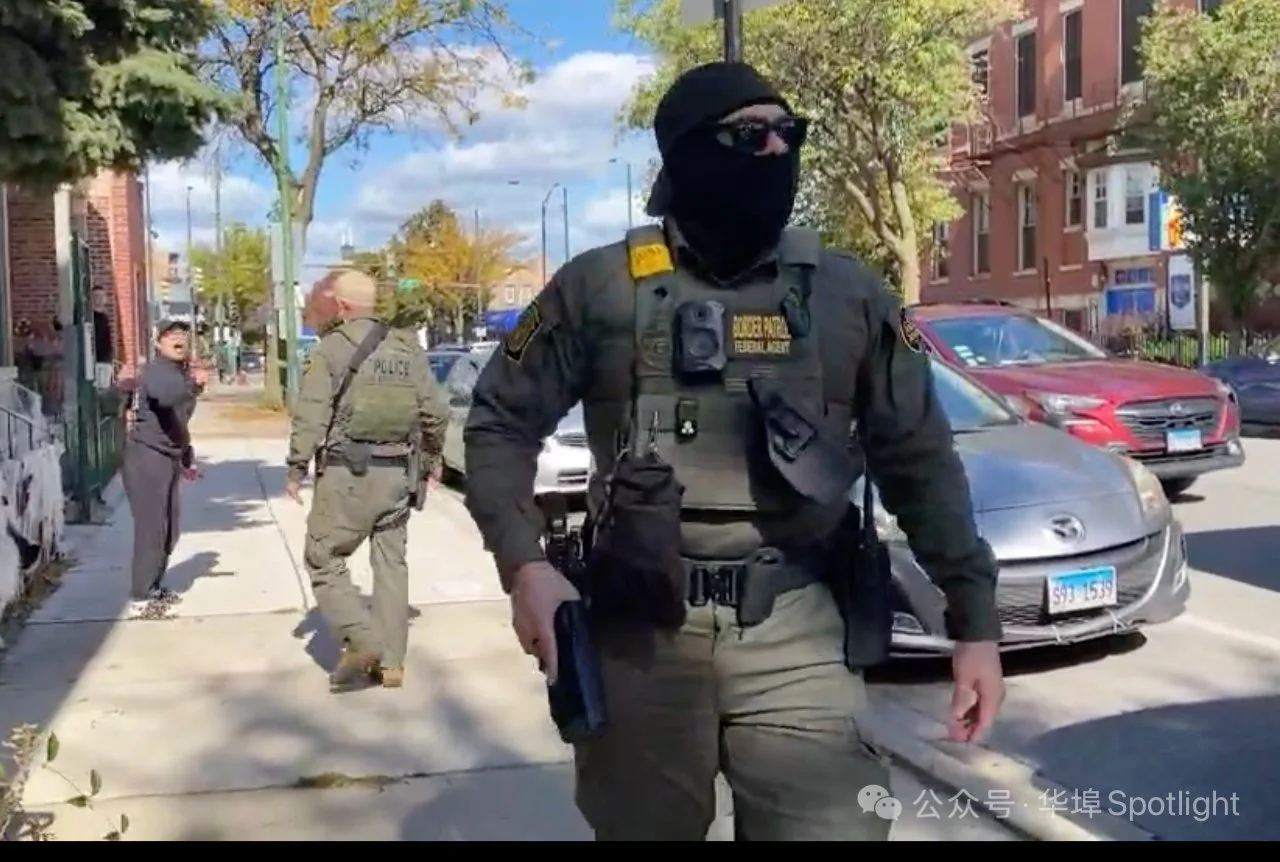
Masked agents wielded tasers, warning residents on the scene.
Courtesy of Bridgeport Rapid Response Team
B. and his wife entered the United States 10 years ago on tourist visas. In 2016, they filed for asylum, later obtained work permits, and have been working while waiting for their case to be processed. Nearly a decade later, they still have not received an interview or hearing — their application remains pending. During this time, their second child was born in the U.S. and became an American citizen.
According to B.’s wife, they have always abided the law and have no criminal record. Like A.’s family, they also recently paid the new $100 asylum application fee.
When Law Enforcement Breaks the Law
Under current U.S. immigration law, arrests of immigrants must be based on reasonable suspicion or an arrest warrant. Yet, records from multiple Chicago Rapid Response Teams show that many recent arrests have failed to follow legal procedure. Agents did not present warrants or offer explanations for “reasonable suspicion.” Most detainees were asylum applicants awaiting hearings, with no criminal records or deportation orders.
The Trump Administration claimed the operation was aimed at “violent criminal offenders.” Tricia McLaughlin, Assistant Secretary at the Department of Homeland Security (DHS), said:
“Homeland Security enforcement in Chicago is doing the right and legal thing — arresting illegal immigrants with records of violent crimes, including domestic violence, abuse, assault with deadly weapons, drunk driving, and other serious offenses.”
However, investigations by multiple media outlets using Freedom of Information Act (FOIA) requests and cross-verified data found that 70% of detainees had no criminal record.
Gregory Bovino, the Border Patrol chief overseeing Operation Midway Blitz, previously said agents could decide whether to arrest someone based on appearance.
In Chicago, arrests swept up teachers, delivery workers, Uber drivers, chefs, barbers, construction workers, small business owners, and even parents and children. Agents targeted not only undocumented immigrants but also legal residents and U.S. citizens, using threats and physical force.
In Hyde Park, agents briefly detained a University of Chicago student on an F-1 visa. In Rogers Park, 60-year-old Mexican immigrant Rubén Antonio Cruz was stopped while walking in a park, pushed onto a vehicle and held for questioning. Although agents eventually confirmed his green card status, they fined him $130. On Ohio Street, U.S. citizen Maria Greeley, 44, was only about to take her dog for a walk after work when she was surrounded by three federal agents, zip-tied, and detained simply because she looked like a Latina.
An October investigation by independent non-profit investigative news outlet ProPublica found that at least 170 U.S. citizens nationwide had been arrested or detained by immigration authorities — and the true number may be far higher. In just one raid in late September in Chicago, dozens of citizens were detained.
Journalists, clergy members, and elected officials were also among those attacked. Outside the Broadview immigration processing center, a WGN-TV producer was assaulted and detained; a pastor was hit by a pepper ball. Illinois State Representative Hoan Huynh was held at gunpoint while following an ICE vehicle. Chicago Alderwoman Jessie Fuentes was handcuffed at Humboldt Park Hospital for demanding to see a warrant for a detained resident.
Civil rights organizations have filed lawsuits against the abuse of power by immigration officers. On November 6, U.S. District Judge Sara Ellis issued an injunction limiting the use of force by immigration agents. In her oral ruling, Judge Ellis said that Commander Gregory Bovino, who led the Chicago operation, lied repeatedly under oath, denying the use of force by his team despite overwhelming evidence.
Judge Ellis cited multiple incidents over the previous six weeks, with video, photo, and eyewitness evidence showing that civilians were tear-gassed indiscriminately, beaten, tackled, and struck in the face by pepper balls.
“The use of force was shocking,” she said.
Fear and Anger
Fear, anger and a sense of helplessness are now spreading through immigrant communities.
After A. and B. were taken, their families moved in with friends, fearing their homes were unsafe. They were too afraid to go to work, and their children had to stay home from school.
Several Chinese asylum seekers told Chinatown Spotlight they now only leave home to commute to work. One woman from Hunan Province said she relies on friends to buy groceries or orders from Weee, an online Asian grocery platform.
In neighborhoods like Little Village, Pilsen, and Brighton Park, small businesses have been affected, and residents are staying indoors as much as possible.
“Families call crying, gasping for breath between sobs. It’s heartbreaking and makes me feel powerless,” said M., a bilingual Mandarin-English operator for the ICIRR Family Support Network hotline (FSN: 1-855-435-7693), who joined in late September.
Over the past month, M. and two other bilingual operators have handled over 1,000 calls, representing just a small fraction of the statewide FSN network.
M. explained that the calls generally fall into two categories: reports of ICE activity in communities and requests for help from families of detainees.
“We take down the information and report it to the Rapid Response Team. The callers come from all ethnic backgrounds, though few are Chinese. Some have work permits — and some are even citizens.”
In the beginning, M. said they also received harassing or threatening calls — some pretending to be victims, others hurling abuse or making threats: “People would say things like, ‘The phone lines are tracked — we’ll find you,’ or curse us for helping ‘illegal immigrants’ who are ‘stealing your jobs.’”
Later, ICIRR strengthened security measures to block and filter out such calls.
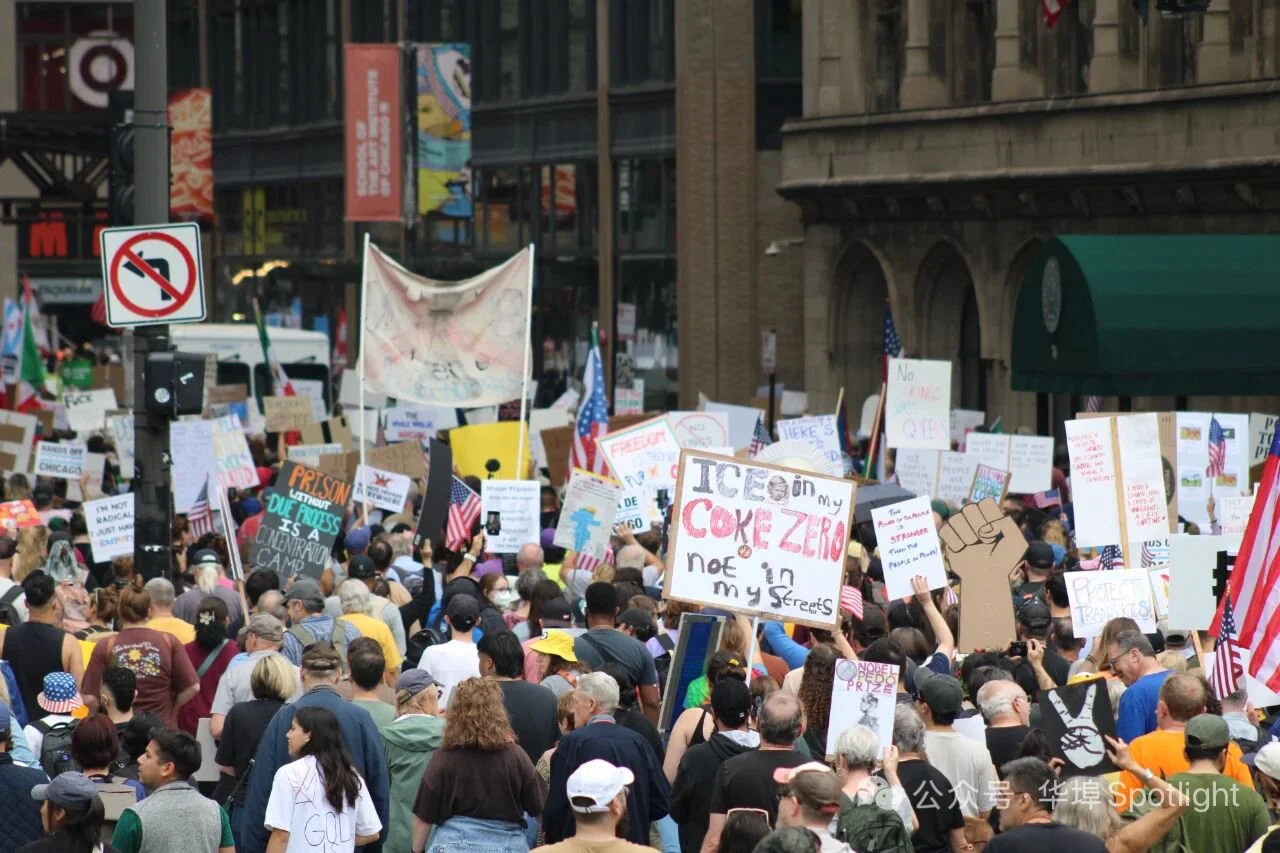
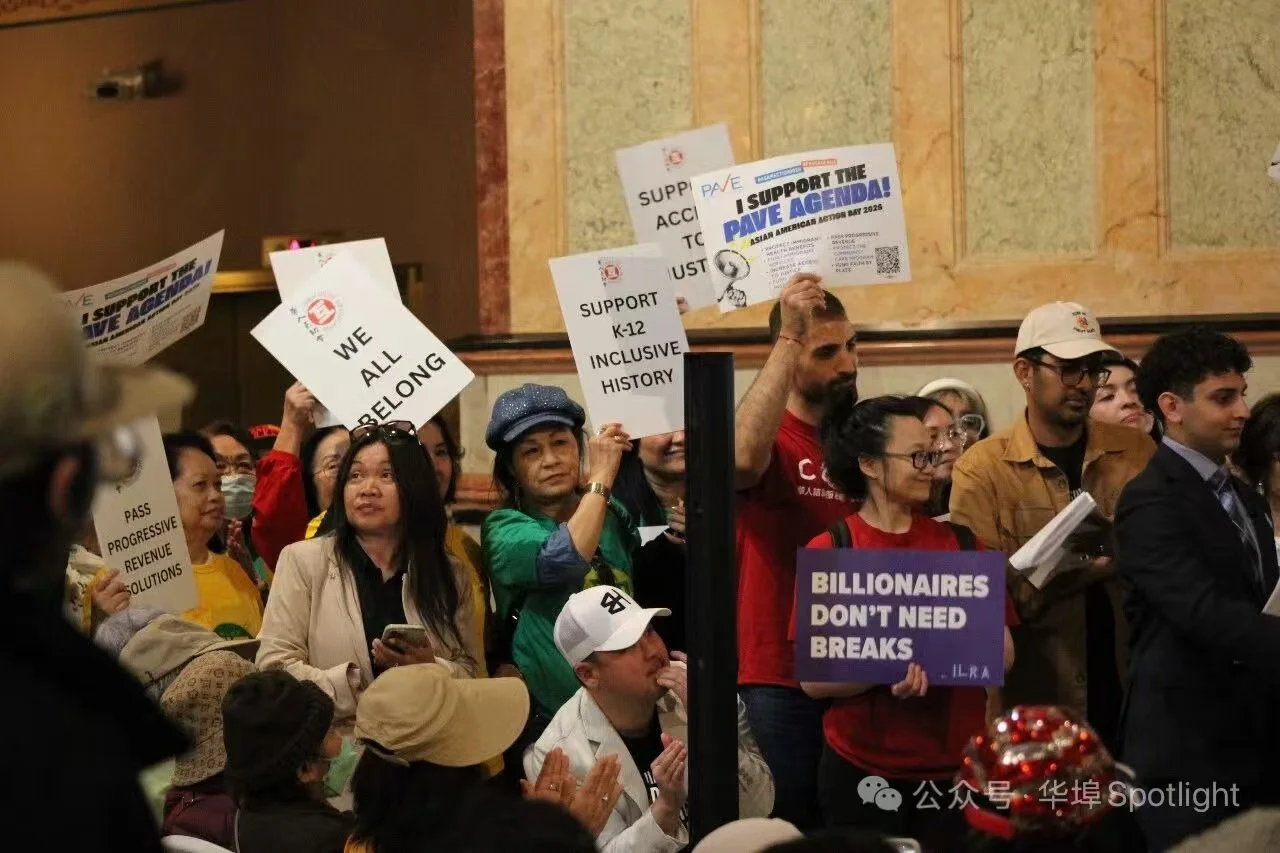
On October 18, at the downtown “NO Kings” march, many participants held signs opposing ICE.'
Shuxi / Chinatown Spotlight
Meanwhile, protests of all sizes have been erupting across Chicago’s neighborhoods. The Broadview ICE Processing Center has become a particular focus of public outrage. Demonstrations now occur there almost daily.
Every immigrant arrested in Chicago is first brought to Broadview for processing, before being transferred to out-of-state detention centers. Last week, the MacArthur Justice Center and the Roger Baldwin Foundation of the American Civil Liberty Union filed a class-action lawsuit, describing Broadview as “a black hole where federal officers act with impunity.” The facility has repeatedly denied access to attorneys and even federal and state lawmakers.
According to lawyers and detainees, conditions inside are deplorable — detainees are sometimes forced to sleep beside leaking, sewage-filled toilets.
On November 5, a federal judge ordered the facility to provide adequate food, water, and bedding.
“This has effectively become a prison,” said U.S. District Judge Robert Gettleman. “Even in facilities for convicted felons, such conditions would be unconstitutional. But these people are not criminals — they are civil detainees.”
The Sound of Whistles
We need more,
Join us.
Take up a corner,
Blow a whistle or yell,
Check on your neighbors,
Show up after school to
Make sure babies are okay.
These lines, from a poem titled I Love Chicago by youth organizer Juliet de Jesus Alejandre, have spread widely among activists. The whistle has since become a defining symbol of this movement.
Community-based mutual aid networks are expanding rapidly, including rapid response teams that document ICE activity and provide community assistance.
Volunteers operate across the city — wearing whistles or driving cars, honking and whistling to alert residents of ongoing ICE operations, urging those without secure status to leave the area quickly.
The Chinatown/Bridgeport Rapid Response Team, founded in March, was initially small due to limited ICE activity. But in the past two months, its membership has grown from around a dozen to more than 100 volunteers.
Bridgeport resident S., one of the team leads, explained: “People are seeing firsthand how immigration enforcement harms our community. What really struck me was when they started arresting parents dropping their kids off at school — that clearly contradicted their claim of targeting criminals. It left people frustrated and angry.
We now have over 100 people ready to respond to any ICE operation,” S continued. “Once they get a tip, they go out to document what’s happening. The recordings and videos are incredibly important, especially if ICE agents act violently or illegally. They also shout out information about detainees’ rights — that’s both to protect them and to show that they’re not alone.
Recently, more volunteers have begun organizing mutual-aid activities — helping deliver groceries or escorting children to school. One resident even donated nearly three hundred whistles, and we’ve been distributing them throughout the community.”
Each Sunday, the team canvasses local neighborhoods, handing out “Know Your Rights” materials. As of the date of this article’s publication in Chinese, volunteers have spoken with more than 300 residents and business owners, distributing more than 1,800 flyers.
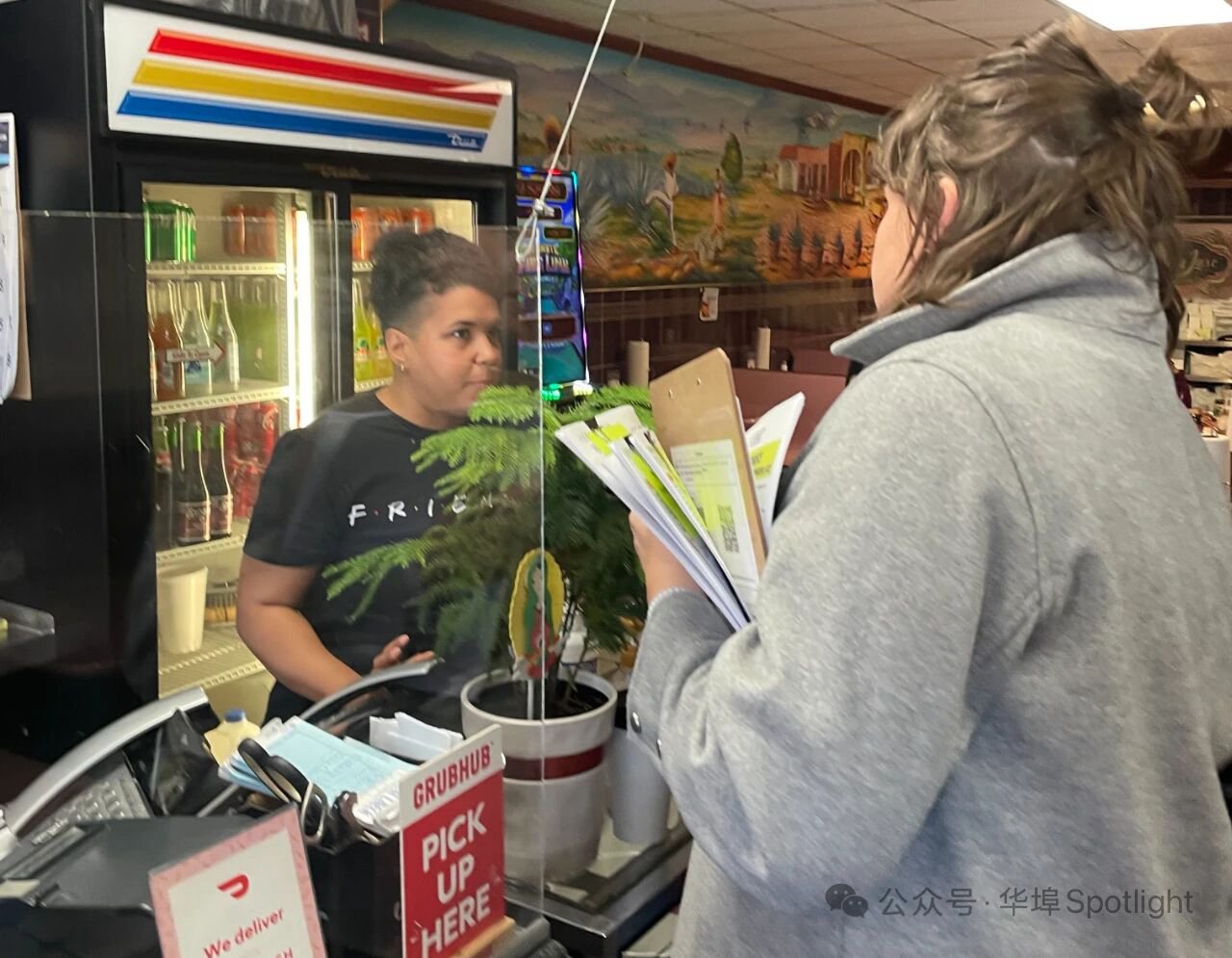
On November 2, Chinatown/Bridgeport Rapid Response Team were conducting outreach to local businesses.
Courtesy of Bridgeport Rapid Response Team
“At first, residents reacted with indifference. Some said, ‘I’m a citizen, I have a Green Card, so I’m not worried.’ But as more news came out—people with no criminal record, even Green Card holders and citizens being arrested—residents grew more concerned and more welcoming toward volunteers sharing this information,” S. added.
“I’ve seen things getting worse in the news, and I’ve seen them getting worse in my own neighborhood,” said N., a Jewish American whose great-grandparents immigrated from Europe. N has lived in Bridgeport for 15 years. “It’s easy to feel scared, sad, or frustrated, and to want to isolate yourself, to stop thinking about it. But I believe, given what’s happening now, you can’t choose not to think about it or to turn away.”
N. joined the Chinatown/Bridgeport Rapid Response Team in October, primarily doing behind-the-scenes work such as logistics, administration, and coordination—tracking ICE operations citywide, alerting the team when actions occur nearby, and occasionally joining community outreach walks or documenting ICE activity on-site.
An immigrant from China, H. joined in late September. She said she feels “the power of solidarity” in this movement. Although she isn’t a U.S. citizen, she wanted “to be part of this historic moment,” so she began walking the neighborhood with her teammates every Sunday, sharing information with residents and business owners.
“I’ve lived here for six years. Chicago is a very friendly city. Now suddenly a bunch of federal agents show up doing cruel things—it feels like they’re turning my home into a battlefield for no reason. This isn’t just an immigration issue; it’s an attack on the community,” H. said. She admitted she was hesitant at first, but as the situation worsened, she felt she had to act, seeing it also as “a kind of training in taking risks and engaging in social movements.”
H. noted that among residents awareness about immigration enforcement varied greatly. “Some people know a lot about it. But some older residents have no idea—they don’t even know what ICE is. Language barriers are part of it; some only speak Cantonese and rarely follow the news.”
M. also called for more people to join and help in whatever ways they can. He said that after coordination, the FSN hotline will soon have a dedicated Chinese-language line. He hopes more people will learn about these resources.
S. added that it’s unclear when the Department of Homeland Security will stop the raids, but the team will continue to grow and help families in need.
“Every day we’re becoming more organized. Every day more people are coming together. Even though there are hundreds of ICE agents in the city, there are tens of thousands of Chicago residents uniting to protect one another. I think this will only get stronger. What matters most is that we keep moving forward. Remember, as a community, a city, and a state, we are strong. We are stronger than the forces trying to tear us apart,” said N.
(All names of arrested Chinese immigrants and Rapid Response Team members are pseudonyms per their request.)
Resources:
https://www.chicagotribune.com/2025/10/18/no-kings-chicago-protest/
https://www.chicagotribune.com/2025/09/29/ice-immigrant-families-ohare/
https://wgntv.com/news/operation-midway-blitz/federal-agent-activity-in-old-irving-park/
https://www.chicagotribune.com/2025/10/03/ice-agents-tear-gas-school-street/
https://www.chicagotribune.com/2025/10/13/ice-fines-chicago-man-for-not-having-papers-on-him/
Author: Shu Xi
Master of Public Administration; Senior Manager of Civic Engagement, Coalition for a Better Chinese American Community (CBCAC); Editor of Chinatown Spotlight
Related Articles

For nearly 40 years, Gourmet Food Inc. has been a part of Chinatown residents’ lives.