

Staking out Springfield:How a Chinatown High Schooler Takes His Community’s Fight to Lawmakers
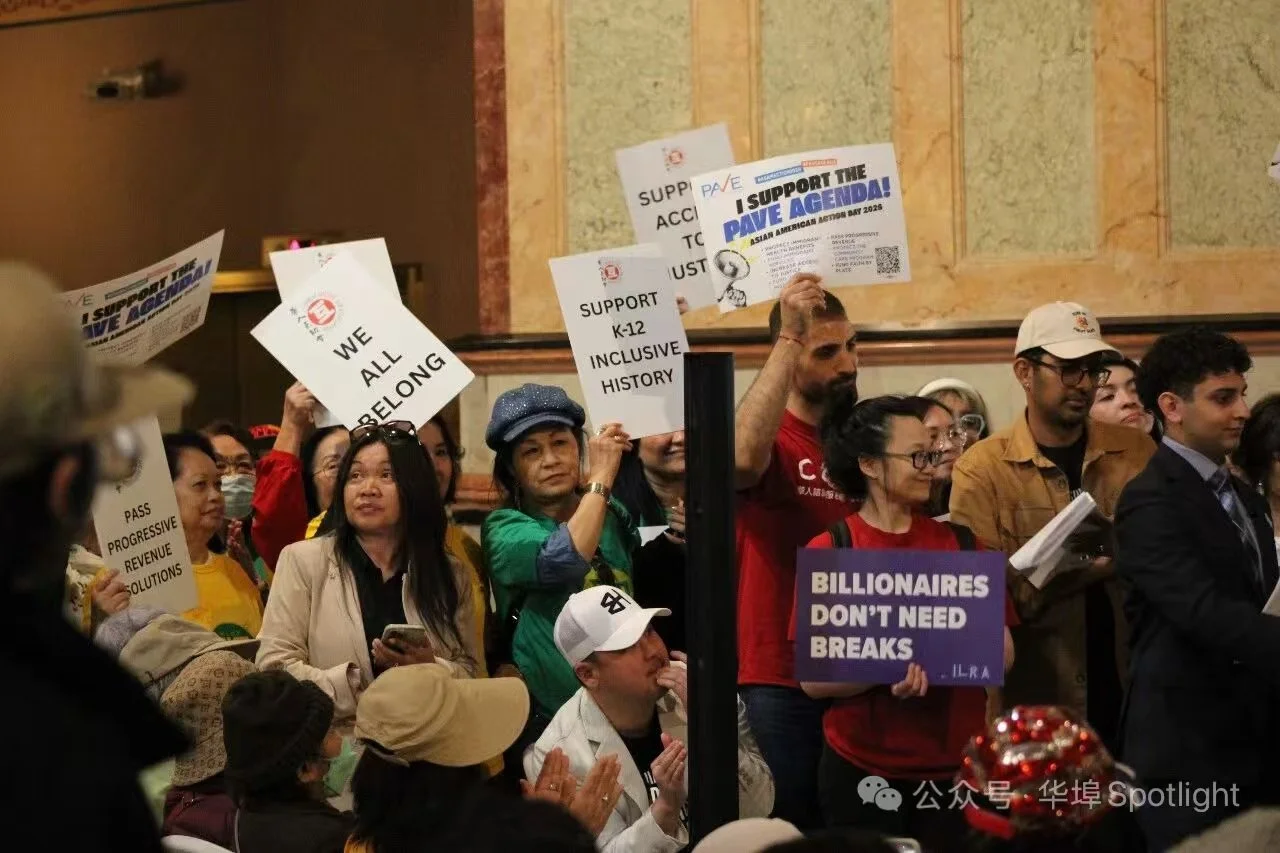
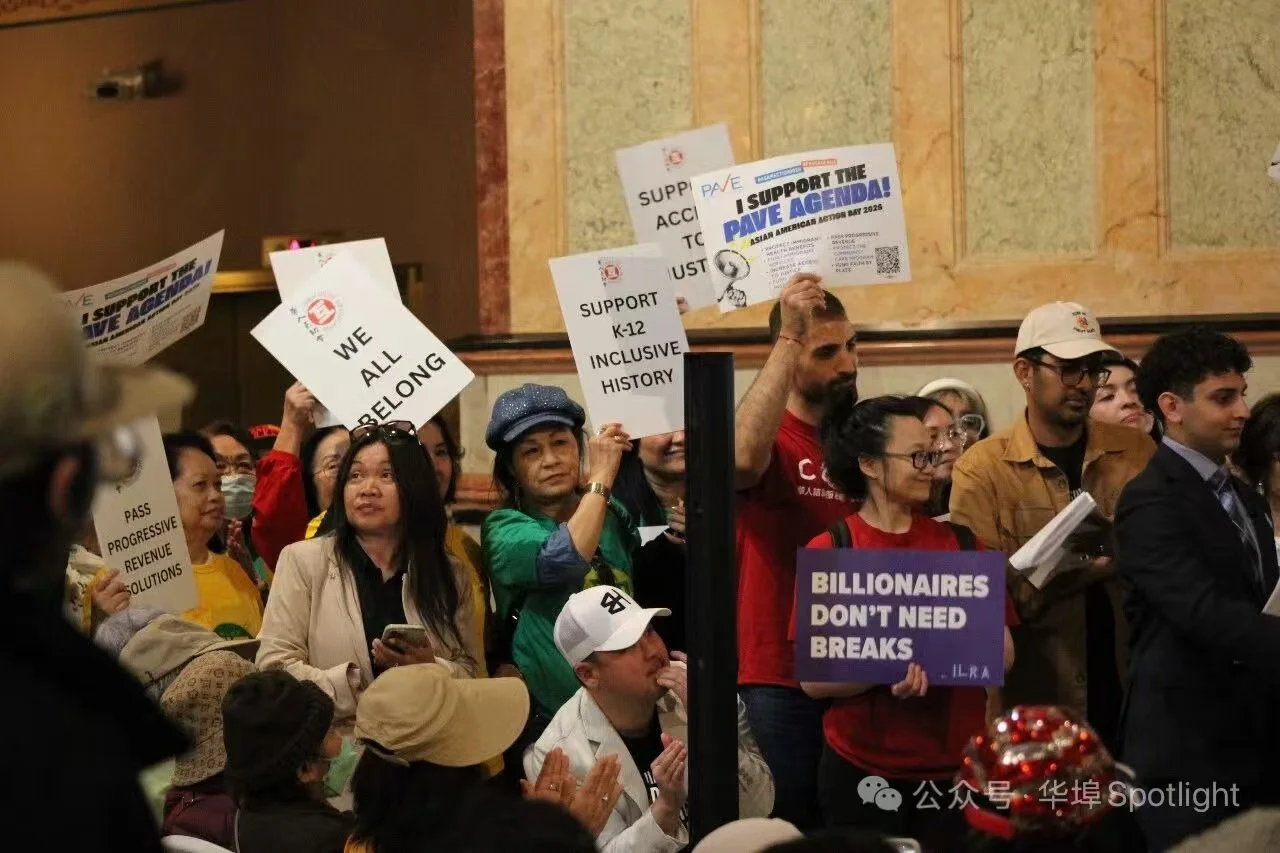
On May 6, 19 Asian American organizations from Chicago participated in the 13th Asian American Action Day. Pictured are participants gathered in the first-floor rotunda of the state capitol, holding signs in support of the legislative agenda.
Source: Shuxi / Chinatown Spotlight
The State Capitol corridors in Springfield were bustling with advocates and lobbyists on the lookout for lawmakers. High school senior Alan Luu and his fellow advocates spotted their target: State Senator Willie Preston (D-16th).
As Preston emerged from a legislative chamber with a small entourage, Luu pounced. He rushed forward, cornering the senator to make an impassioned pitch about the critical importance of the Health Benefits for Immigrant Adults (HBIA) and Health Benefits for Immigrant Seniors (HBIS) bills.
“Initially, I was excited but a little bit worried because I was thinking, ‘What if I say the wrong thing?’” Luu said. “I was just nervous because this was my first time ever speaking to a senator or a public official of his stature.”
Luu took his maiden trip to Springfield lawmakers as part of an annual mobilization known as Asian American Action Day (AAA Day). His mission was personal: to persuade Preston to support legislation that expands healthcare coverage to low-income immigrants.
Simply getting here was half the battle. "Springfield is a three-hour drive from Chicago," Luu said. "Especially for me, I'm a high schooler, and that means I’ve had to take a day off from school."
After arriving shortly after dawn with a caravan of volunteers, Luu’s group spent nearly an hour staking out legislative offices and the Senate floor but saw no sign of Preston. The group’s leader—Sarah Tang, program director for the Coalition for a Better Chinese American Community (CBCAC)—led them to the main lobby, where they knew lawmakers would eventually have to come through.
The persistence paid off. Preston, who chairs the State Senate Black Caucus, stopped and listened attentively to the high schooler's appeal, later telling the group he would continue seeking revenue streams to fund the healthcare initiatives.
Though the encounter lasted only a few minutes, Luu believed he has made a difference. "I am hopeful that he does read our packet that covers HBIA and HBIS," Luu said.
Together, the two bills cover the healthcare costs for nearly 50,000 immigrants who aren’t eligible for Medicare or Medicaid as they aren’t U.S. citizens.
Grassroots lobbyists like Luu have plenty of company. So far this year, 19 Chicago-area organizations under the Pan-Asian Voter Empowerment (PAVE) Coalition have mobilized more than 400 volunteers to descend on the Capitol, pushing a broad legislative agenda aimed at uplifting immigrant communities.
CBCAC brought from Chinatown a total of 55 volunteers, who included high-school students, young professionals, and seniors. Beyond healthcare expansion, the group lobbied for bills holding U.S. Immigration
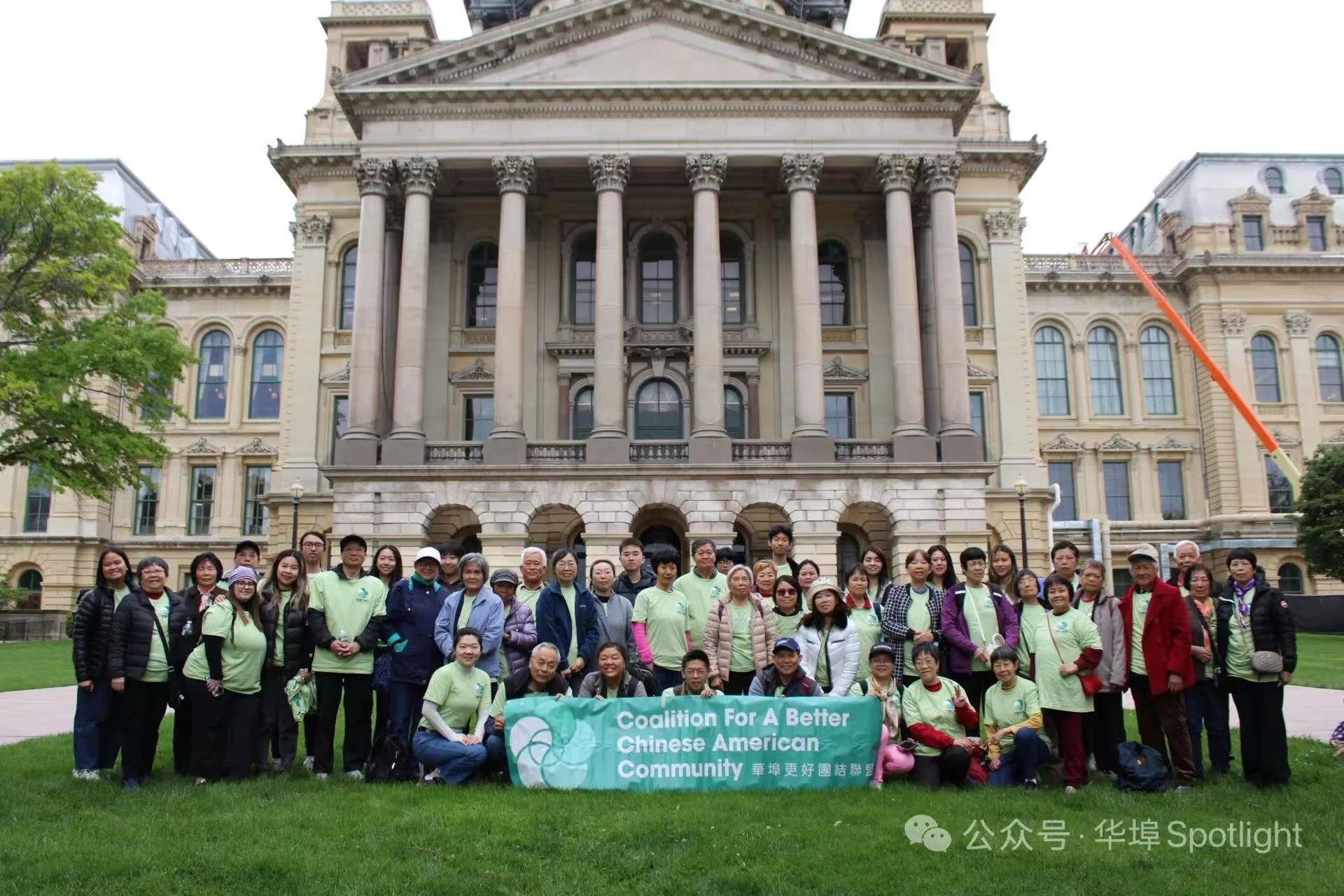
Coalition for a Better Chinese American Community organized 55 Chinese American volunteers to participate, including high school students, young immigrants, and seniors. Pictured are the volunteers posing for a group photo in front of the state capitol building.
Source: Shuxi / Chinatown Spotlight
Strength in Numbers
"Just by being there really helps your case," Luu said, adding he often heard Chinatown residents would complain that state and local governments ignore them. Showing up at the Capitol as a big group made it a force to reckon with, he said, because there is strength in numbers.
Last year, AAA Day advocates successfully secured millions of dollars in state funding for the Immigrant Services Line Item (ISLI) and a more inclusive history curriculum for high school students.
ISLI funds social services offered by local organizations, such as naturalization application assistance and ESL courses.
For Wang Qing (a pseudonym), the trip was a political awakening. Wang hailed from Zhejiang, China, as an international student but now works full-time in Chicago, called herself a passive "consumer"of politics.
“Lobbying is a way to voice your needs and maybe convert them into a bill that’s helpful for a lot of people,” Wang said, noting that she previously felt powerless to effect change.
Wang stood alongside Luu inside the office of State Sen. Michael Hastings (D-19th), urging him to support a ban on state agencies from collecting immigration status data. Hastings schooled the group in how the proposed policy might play out across different legal scenarios.
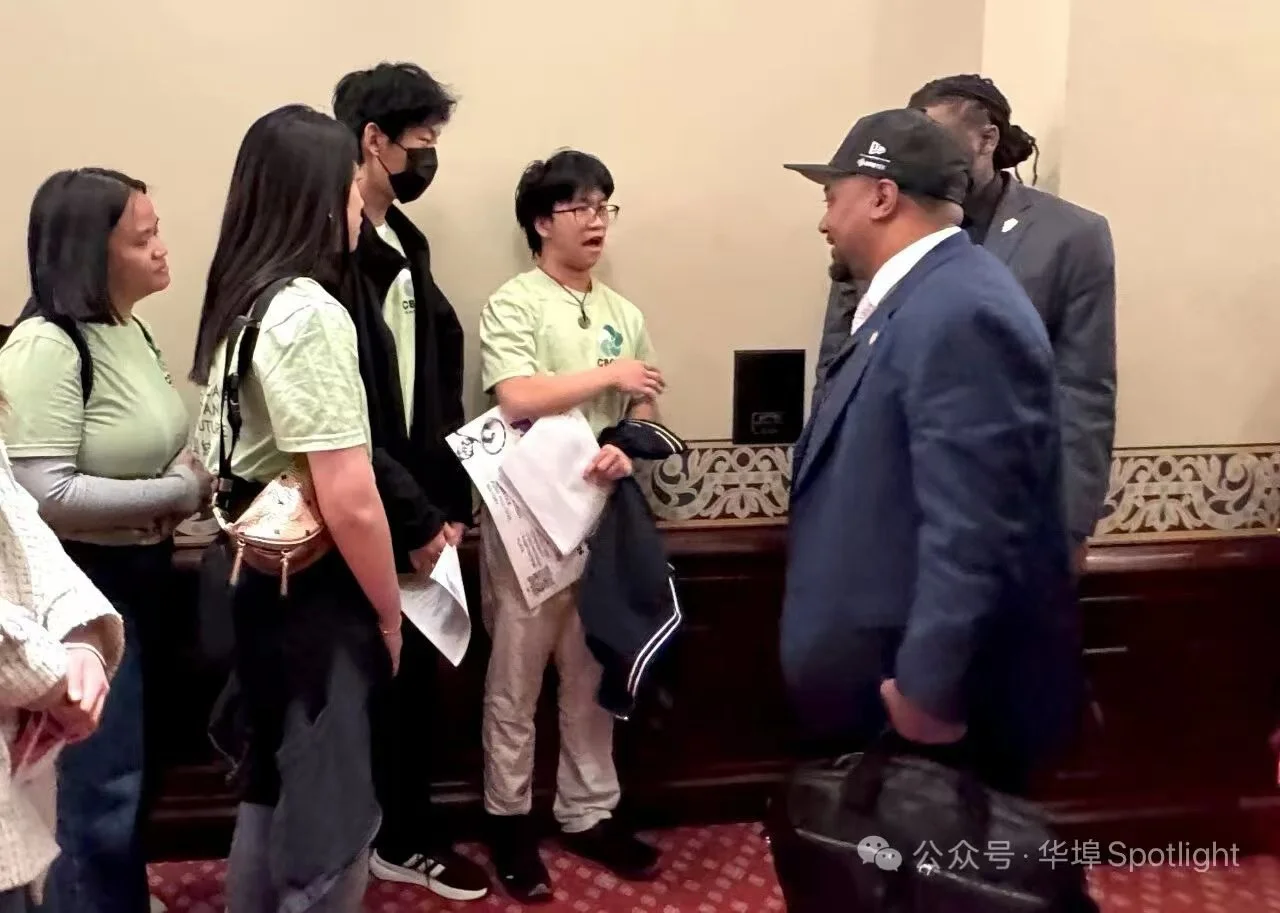
Alan Luu (center, wearing glasses) lobbies Senator Willie Preston (right, wearing a black cap) in support of healthcare benefits for immigrants.
Source: Shuxi / Chinatown Spotlight
Even for older residents, the jaunt to Springfield was eye-opening. Elaine Chiu, a septuagenarian fixture in Chinatown civic life who served as president of the Hong Kong Club of Chicago, had never lobbied state legislators before. She said she was unsure what to expect but left feeling empowered.
“You could try to schedule a meeting with a legislator or the governor on your own, but they are so busy that if a single individual requests a meeting, they might not agree to see you—they wouldn't even know who you are,” Chiu said.
Shattering the 'Passive' Trope
The May 6 mobilization came at a time when Asian Americans are underrepresented in the political arena. Nationally, while Asian Americans make up roughly 6 percent of the population, they hold fewer than 1 percent of elected offices, according to data from the University of Southern California. A 2023 report by the CIRCLE academic center at Tufts University found that less than a third of Asian American youth believe they have the capacity for civic action—10 percentage points lower than their non-Asian peers.
Valerie Chu, an attorney joining AAA Day for a third year, conceded that mobilizing the community remains an uphill battle, partly due to deep-seated cultural stereotypes.
"The 'model minority' stereotype portrays Asian Americans as submissive and politically passive," Chu said. She believes education is critical to dismantling this stereotype. That was why she and her husband brought their elementary-school-aged son to the Capitol.
"Not long ago, [my boy] took the initiative to write to Rep. Mah to request a meeting," Chu recalled proudly. "He plans to bring his classmates along to have a conversation with her."
Chu argues that Chinatown organizations must build coalitions both within the neighborhood and across Chicago, particularly for newcomers who still harbor a fear of authority that stemmed from experiences in their countries of origin.
"We need to tell new immigrants they actually have the rights, rather than assuming that simply because they’ve immigrated here, they must blindly obey whatever they are told,” Chu said. “Asian Americans tend to be very deferential. They often feel that they must simply 'do as the Romans do'—essentially thinking, 'Whatever you say, I will do.'"
For students like Luu, the path forward starts locally. He points to grassroots groups like the Teen Coalition for Chinatown and CBCAC’s youth program, Origin, as vital entry points. Through his involvement in local campaigns surrounding "The 78" mega-development, Luu learned firsthand about the zoning powers of Chicago alderpersons and how community benefits agreements can prevent displacement.
“So in a way, groups like the Teen Coalition and Origin can be stepping stones,” Luu said. “They let young Asian Americans start getting into politics—especially Chicago politics.”
Reporter: Mavis Chan
Related Articles

For nearly 40 years, Gourmet Food Inc. has been a part of Chinatown residents’ lives.