

Casinos Find Preys in Lonesome Chinese Americans
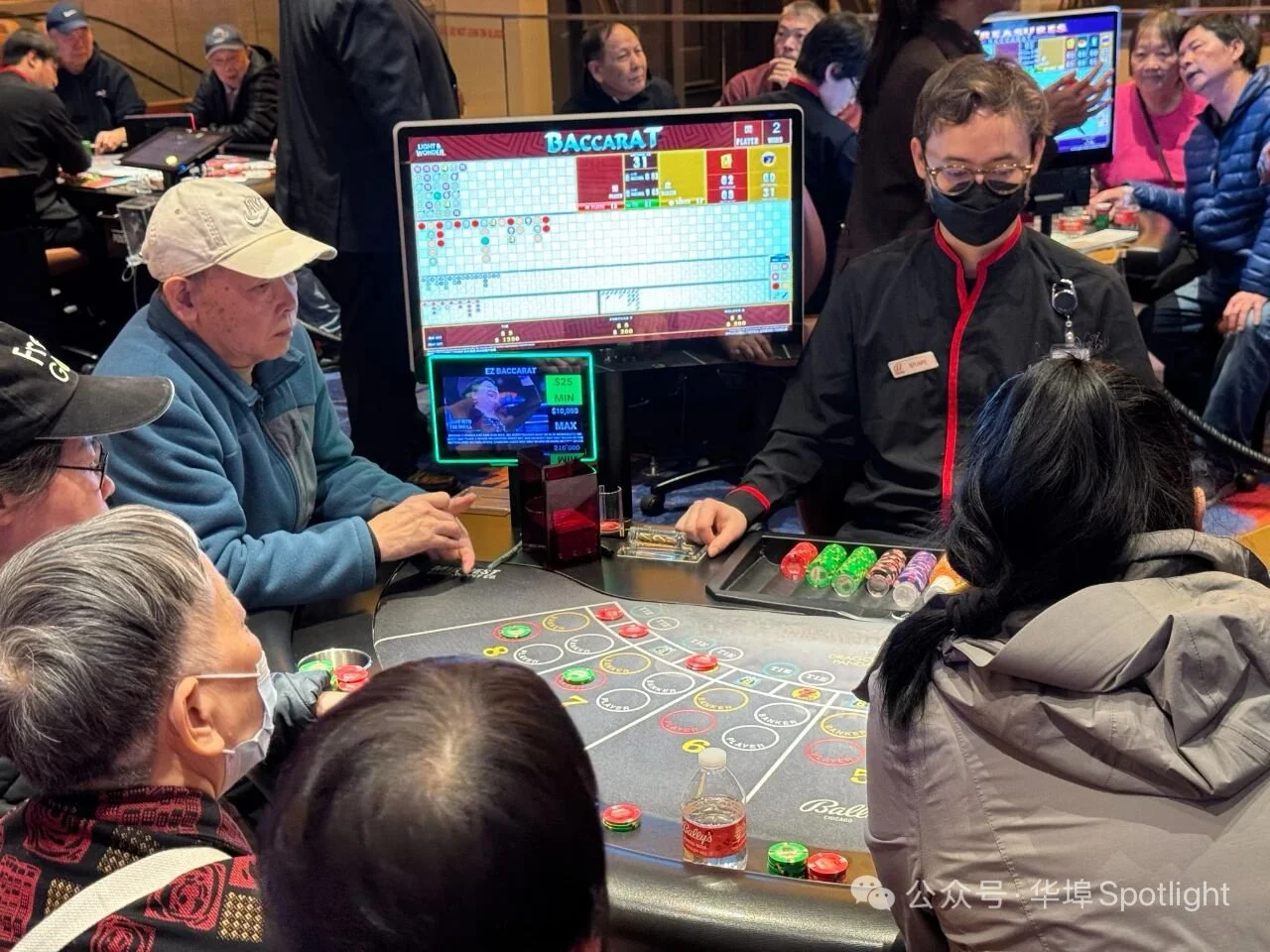
On March 17, a group of Chinese patrons were playing baccarat on the third floor of Bally’s Casino in downtown Chicago.
Shuxi / Chinatown Spotlight
In Chicago’s Chinatown, you can spot traces of gambling almost everywhere. At the supermarket, an auntie carries a red reusable bag printed with the Ameristar Casino logo. At the park, elderly uncles stroll by wearing Rivers Casino hats or T-shirts. At the Chinatown CTA station, ads for the grand opening of Wind Creek Casino once stretched from the entrance turnstiles all the way to the platform billboards. Horseshoe Casino’s promotional events flash across the giant electronic screen in front of Furama Restaurant, while on local Chinese-language media platforms, casino ads, job postings, and celebration announcements frequently take the top spots. Every thirty minutes, a Bally’s Casino shuttle bus reliably stops in front of the Chinatown library.
“In Chinatown, almost everyone knows someone — a friend or a family member — who struggles with gambling,” said C.W. Chan, former president of the Chicago Chinatown Chamber of Commerce, founder of the Coalition for a Better Chinese American Community (CBCAC), and a long-time community leader. CBCAC, a community advocacy organization, was born out of the anti-casino bus movement of the 1990s.
Gambling is both a commonly seen and rarely discussed issue in Chinatown — one that has long existed yet seldom been taken seriously.
Mimi Tsang, Substance Use, Gambling, Bullying Prevention Program Manager at the Midwest Asian Health Association (MAHA), calls gambling “the elephant in the room” for the Chinese community:
“It’s a kind of silence. No one talks about it. Family members don’t want to talk about it either — they just leave the elephant there in the room. And that makes the problem easier to hide.”
This year, Chinatown Spotlight visited casinos and mahjong parlors across Chicago and spoke with more than a dozen Chinatown residents, workers, and community service providers involved in gambling addiction prevention — to talk about this very “elephant in the room.”
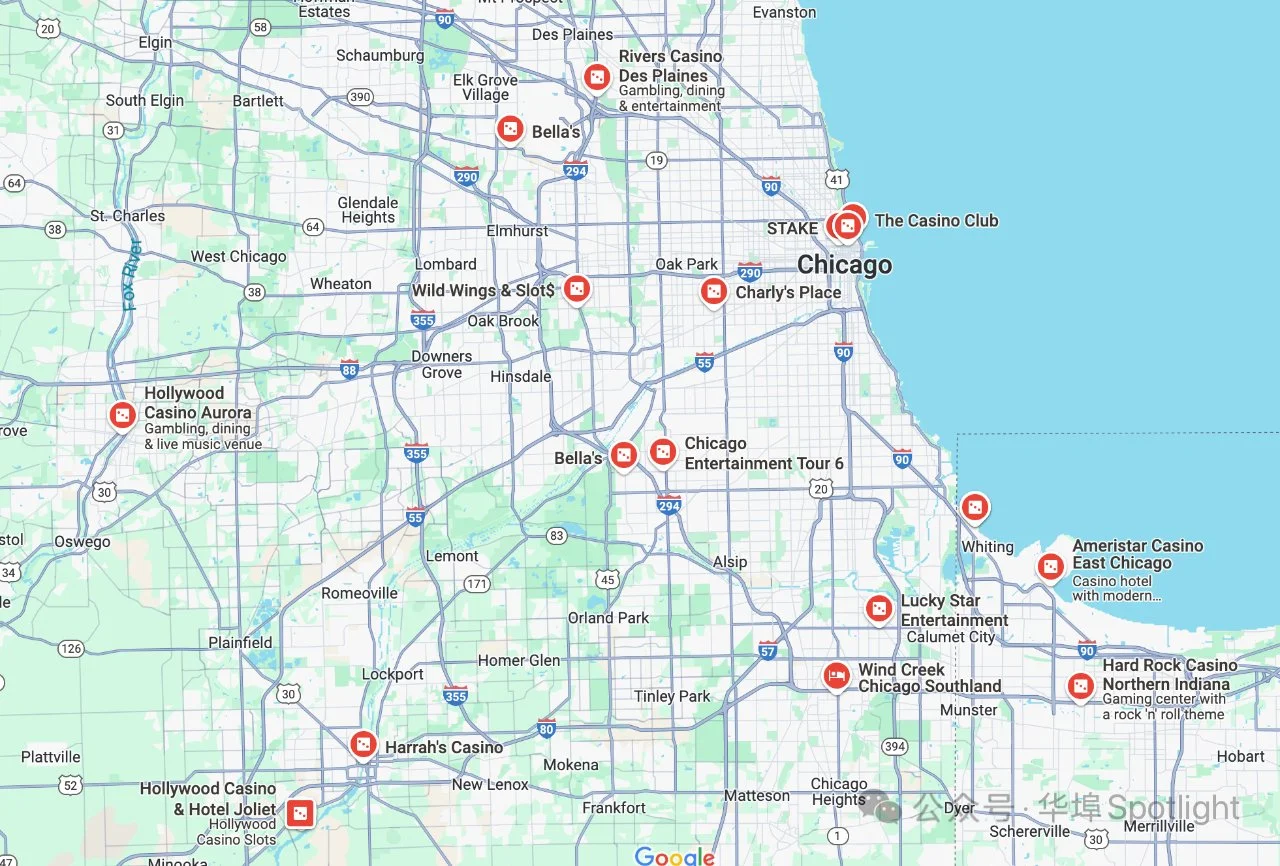
Casinos are widespread throughout the Chicago area — and the Chinese community has become one of their key target customer groups.
Screenshot from Google Map
“Gambling doesn’t need to be taught, and you don’t need to know English to do it.”
“Most Chinese people love to gamble. You can find Chinese patrons in every casino,” said Amin, who came to the U.S. a year and a half ago. He occasionally goes to Bally’s Casino to play the slot machines.
In American casinos, slot machines are the most common and simplest form of gambling. After inserting money or recharging the machine, all you need to do is press a button and wait for the three symbols on the screen to align in a winning combination (for example, three of the same symbol) to receive a payout.
“Slot machines don’t require thinking,” said Nancy, who is from Macau. She and her family all once worked in Macau’s casinos. After moving to Chicago, she became a regular at nearby casinos for business and social reasons — at one point even organizing bus trips there. She considers herself quite skilled at playing slots. “[Before I retired], I used to go all the time. I was a VIP — I even stayed overnight once.”
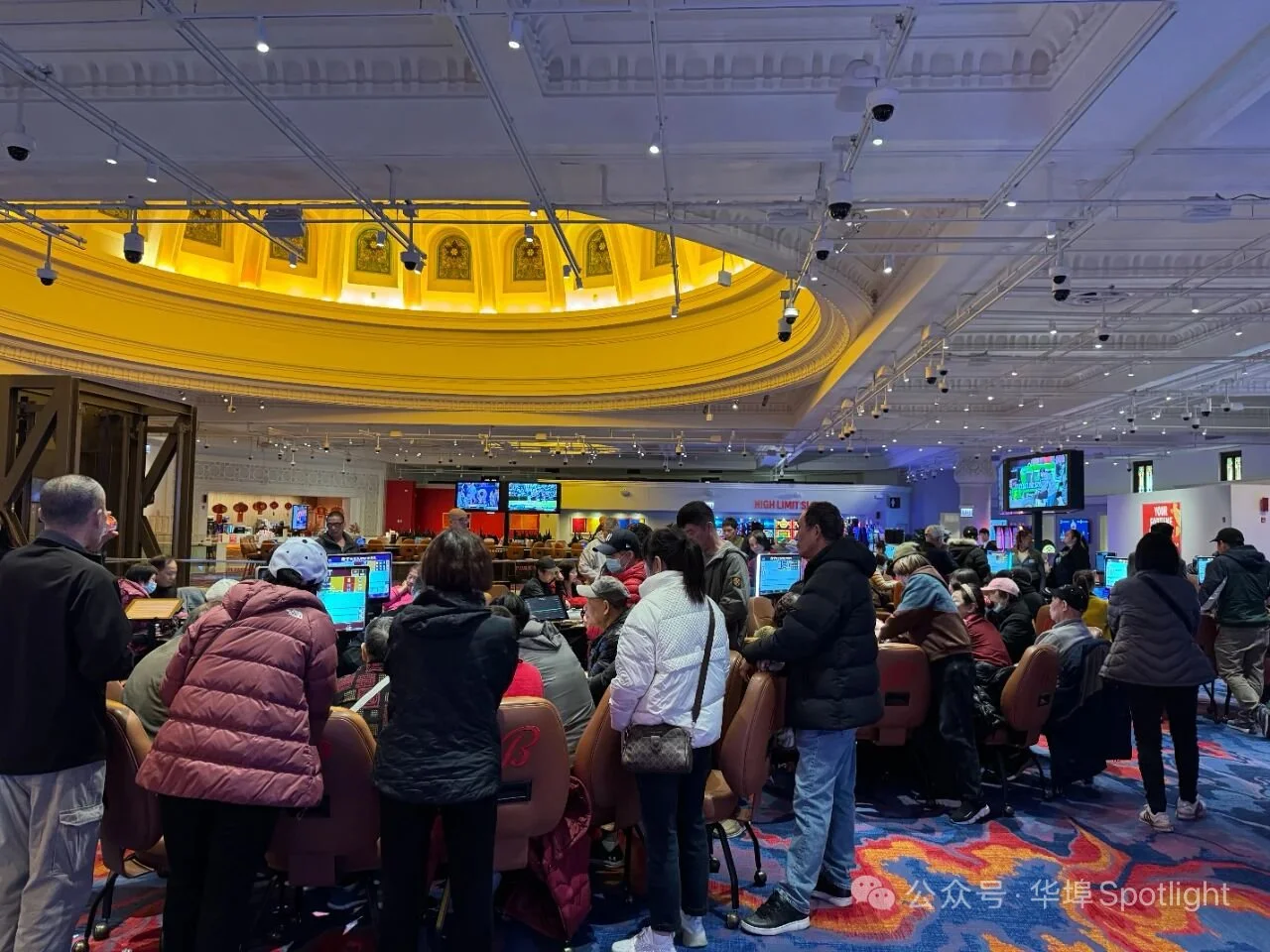
At the baccarat tables on the third floor of Bally’s Casino in downtown Chicago, most of the onlookers and gamblers are Chinese.
Shuxi / Chinatown Spotlight
One afternoon this spring, a Chinatown Spotlight reporter waited in front of New Furama Restaurant with Nancy and another interviewee, Lily, for the free shuttle bus heading to Bally’s Casino downtown.
Bally’s is the only casino located within the city limits of Chicago. After its grand opening in October 2023, the casino began running free shuttle buses to attract customers from Chinatown. The two shuttle routes — serving Chinatown and Argyle, both predominantly Asian communities — are the only two free routes in the city. Starting in March 2025, people noticed the shuttle schedule changed from once an hour (13 trips a day) to every 30 minutes (30 trips a day).
“It’s just for fun. I’ve been to Bally’s recently too. I’m retired, so I have a lot of time,” said Lily, who immigrated from Hong Kong to the U.S. in the 1990s. “I get up in the morning and exercise, then go to Chinatown for dim sum, and in the afternoon I play mahjong or occasionally visit the casino.”
At exactly 12:00 noon, a black bus with “FREE SHUTTLE” written on its side arrived on schedule. Two other people quietly appeared from a nearby building and boarded the bus.
Heading north along Wentworth Avenue, the shuttle stopped at the Chinatown Library, where about a dozen more Chinese passengers got on. The group — nearly 20 people in total — arrived at the casino’s front entrance half an hour later. Most passengers remained silent during the ride, though a few exchanged brief greetings.
Following the group of Chinese seniors through the security gate, the reporter noticed that while casinos are required to check everyone’s ID to ensure patrons are 21 or older with valid identification, no one checked the IDs of the Chinese passengers. Their Chinese faces seemed to serve as an unspoken pass. Meanwhile, a group of white tourists nearby were asked to present identification.
Inside, the casino was softly lit, the floor carpet plush underfoot. The first floor was filled with glowing slot machines, giving the impression of stepping into a massive arcade. The gaming area spanned three levels, with surveillance cameras covering every corner — but no clocks anywhere.
Perhaps because it was a Monday afternoon, there were fewer players than expected — around 200 people in total, more than half of them Chinese or Asian. According to Nancy, that was actually a decent turnout. On the first and second floors, a few players sat at slot machines or scattered game tables, but the liveliest spot was the third floor, where 11 active baccarat tables were surrounded by 70 to 80 people, over 90% of them Chinese.
Xiaojun, who works at a suburban Chicago casino, told Chinatown Spotlight that most Chinese gamblers play baccarat, blackjack, or slot machines. Baccarat, she explained, is a simple card game in which the dealer reveals two cards for both the banker and the player, and participants bet on which side will win or if the round will end in a tie.
According to her observations, more than half the players are Chinese, mostly around 50 years old, both men and women. “There are also some younger players in their 30s,” she added.
A single round of baccarat requires a minimum bet of $25, with high rollers wagering up to tens of thousands. Xiaojun said daytime games typically start at $25 per hand, while evening tables double to $50 minimums. Frequent visitors — especially VIP players — often start with bets between $200 and $500.
In total, a gambler’s play session can range from a few hundred to several thousand dollars, though some big spenders are known to wager five figures per round.

The Bally’s Casino shuttle bus stops at the Chinatown Library. Chinatown and Uptown are the only communities where the casino offers shuttle service.
Shuxi / Chinatown Spotlight
Inside, cheerful light music plays over the speakers, occasionally interrupted by announcements for promotions or competitions, which staff members repeat in halting Chinese. From time to time, cheers erupt from certain tables. “Someone must have won big over there,” Lily said. “Sometimes people get lucky — their money can multiply 200 times in one go, making thousands of dollars.”
Most gamblers remain silent, quietly placing bets or jotting down results and calculating odds in small notebooks.
“You don’t need to be taught how to gamble. You don’t need to speak English or even say a word. Just put your money down, and the dealer will exchange it for chips,” said Mrs. Wu, 77, who was once obsessed with gambling when she was younger. “I used to work near the airport — I started at 4 p.m. and got off at midnight. After grabbing late-night snacks in Chinatown with my coworkers, we’d head to the casino. Back then, the casino even reimbursed us for transportation. At my worst, I went every week and lost three to five thousand dollars each time.”
At Bally’s, the reporter watched as a middle-aged man placed $1,000 in cash on the table. The dealer skillfully exchanged the bills for chips, marking the money with a special pen — a routine they both seemed familiar with.
Half an hour later, when the reporter left the casino, that same man was standing by the entrance, smoking a cigarette.
Sleepless Nights
Almost every Chinese person who has lived in Chicago for some time has had some connection to casinos.
Lian moved from New York to Chicago in 1988. Back then, there weren’t many casinos around the city, and they were far away. “After work in the afternoon, I’d have dinner at home, then around eight I’d drive to a casino in Indiana and play until three or four in the morning. Sometimes I’d visit several casinos in one night—if luck didn’t come at one, I’d go to another,” she said.
Auntie Ye has lived in Chicago for over thirty years, and until just four or five years ago, she still went to casinos occasionally. In the early 1990s, during her second weekend in America, her family took her to a casino in the western suburbs. “I didn’t bring my ID that day, so I waited outside for hours. They used to go every week.”
“It really was a city that never sleeps,” Auntie Ye said. The casino’s dazzling lights were mesmerizing, and food and drinks were free. With enough points, you could even spend the night in the guest rooms there.
Mimi Tsang, substance abuse program manager, has never gambled. Her first visit to a casino was in 2023 for work—she was staffing a booth conducting surveys on gambling addiction. “When you sit inside and see the lights, the machines, and hear all those sounds, you really feel tempted to try. Not to mention the raffles, free gifts, food, and drinks—it’s appealing even for people who don’t gamble.”
Ruby and Deng Xijian, who aren’t particularly interested in gambling either, also went to casinos before—for star-chasing. “Back then, casinos held lots of events, inviting Hong Kong and Taiwanese entertainers to perform during holidays, like Wayne Lai, Ray Lui, or Mimi Chu,” they recalled.
“Since we were already there, we’d always play a few rounds after the concert,” Deng said. She now works as the Community Outreach Coordinator at CBCAC and has long been involved in nonprofit work in Chinatown.
Beyond celebrity shows, most casinos also offered shuttle buses, meals, and various promotions, including live raffles. In earlier years, some casinos in Indiana even distributed cash vouchers, which some Chinese patrons resold for profit. Once casinos caught on, those promotions became less frequent.
In the community, going to the casino was commonly referred to as going to the “gambling boat.” Many casinos back then were located just across the border in Indiana, built along Lake Michigan—some literally on boats that sailed out once gambling began, much like the casino ships in Hong Kong movies of the same era.
Ten years after quitting gambling, Mrs. Wu often reflects on those days with a sigh:
“Gambling was really fun. I’ve gambled, so I know—it makes you forget everything, even time itself.”
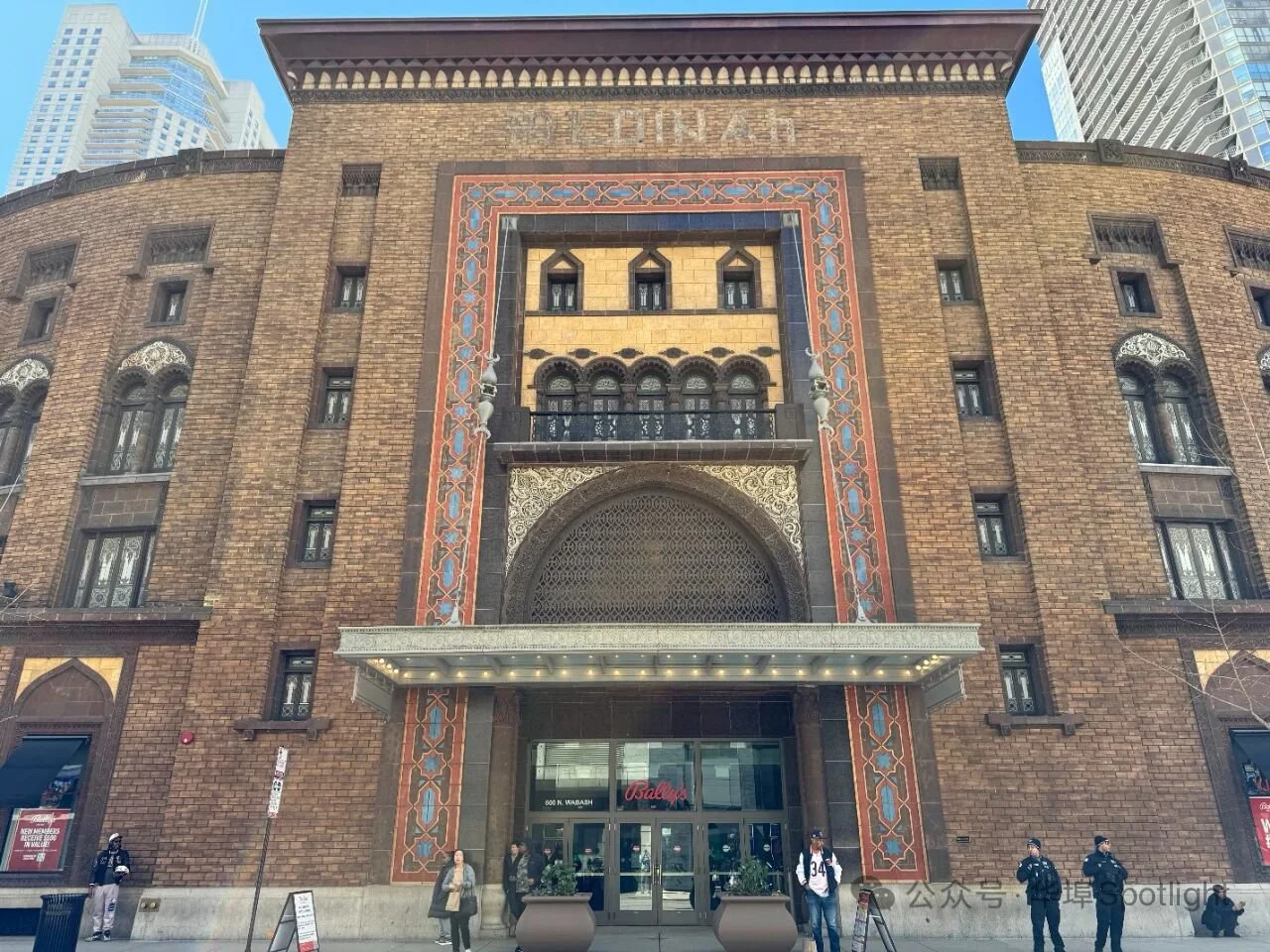
The temporary Bally’s Casino is located at the Medinah Temple in downtown Chicago.
Addiction
“The threshold for gambling is low, and the thrill it brings is intense. Few other activities can replicate that kind of rush,” said Ms. Liao, a counselor and member of Chicago’s Casino Community Advisory Council (CAC), who spent three years working on gambling addiction prevention in Chinatown.
Ms. Liao explained that gambling was once classified as a compulsive behavioral addiction in psychology, but newer research shows that it closely resembles addictions to alcohol, drugs, and other substances — especially in terms of tolerance. “It’s like drinking — at first you can only have a drink or two, but over time you need more and stronger ones to feel the same effect.”
According to the Diagnostic and Statistical Manual of Mental Disorders (DSM-5), published by the American Psychiatric Association, gambling disorder is grouped in the same category as substance use disorders such as drug and alcohol addiction. The manual notes that while certain behaviors not involving substance intake share similarities with substance-related disorders, only one — gambling disorder — has sufficient evidence to be included in that category.
Clinically, there are a series of criteria used to diagnose gambling addiction. The gambling screening survey conducted by MAHA was based on these standards. Questions include: Have you gambled five or more times in the past 12 months? Do you feel restless when trying to stop or cut down on gambling? Do you hide gambling expenses from family or friends? Have you tried to win back lost money? There are ten such questions in total. One key criterion for diagnosing addiction is whether the behavior interferes with normal daily functioning.
Tsang noted that many people with addictions — especially gamblers — tend to hide their losses and exaggerate their wins. In contrast, responsible gambling means playing for entertainment, taking breaks, not relying on gambling as a source of income, staying within affordable limits, and setting boundaries for time and money — or even playing without money at all.
“It’s a mental addiction — like drugs. Some people just can’t stay away,” said Mrs. Wu. She recalled one gambling buddy whose parents owned a restaurant in the suburbs and left him several properties and a lot of cash. “He lost it all because of gambling and later came to borrow money from me. I didn’t lend him any, just gave him $30 for gas. Never heard from him again.”
Xiaojun also met gamblers in similar situations. “Some clients came to borrow money, saying they’d already lost hundreds of thousands — even used their company’s payroll to gamble,” she said.
Many individuals with gambling disorders believe that money is both the cause of and the solution to their problems.
Stories of people losing everything to gambling are common — everyone seems to know a few. Among older residents, tales circulate of Chinatown restaurant owners or wholesale grocers losing millions, forced to sell off their homes and businesses.
“I’ve never seen anyone get rich from gambling — only people who’ve lost everything, even their lives,” Mrs. Wu said.
Loneliness and the Lack of Social Connection
Despite everything, casinos are never short of gamblers.
Auntie Ye said, “Work is stressful, and sometimes you just want to relax. I don’t have many friends here, so going to the casino feels fine.”
Her husband’s eldest sister, now 80, still goes to the casino almost every week. “She uses her credit cards now — her income only covers the interest. But she doesn’t care anymore, and her family can’t stop her. Once she’s on the shuttle, at least she can chat with people.”
Ms. Liao observed that for many Chinese immigrants, casinos serve as an escape from reality. “People aren’t unaware of gambling’s harms — they just want to pass the time. You don’t need English, you don’t need a car — just go. There’s heating in winter and air conditioning in summer.”
Mimi Tsang shared an interesting case. While running an outreach table at the Chinatown Library, she spoke with a woman in her 60s waiting for the casino bus. The woman told her that if she didn’t go to the casino, her family would actually worry — even give her money to go play.
“In a way, I can understand that,” Tsang said. “For many seniors, gambling is just a form of recreation. After retirement, they spend most of their time at home — watching TV, doing some chores or light exercise — but they’re otherwise isolated. Socially, they’re lonely. So if they go to casinos or mahjong parlors, meet friends, and have fun, their families see it as something positive.”
When asked what she liked to do instead, the woman replied that she enjoyed spending time with her grandchildren — but they lived far away and had many extracurriculars, so they rarely saw each other.
Ms. Liao believes gambling is deeply rooted in Chinese culture. “Even if people don’t go to casinos, mahjong is still everywhere,” she said. Many senior housing buildings even organize mahjong games for residents.
In Chinatown, private mahjong parlors have multiplied in recent years, tucked inside houses or clan association buildings. Their doors are usually locked — entry requires knowing someone. From outside, one can clearly hear the sound of tiles being shuffled. Some parlors even serve meals, often run by retirees who host a couple of tables, collect table fees, and cook for their friends.
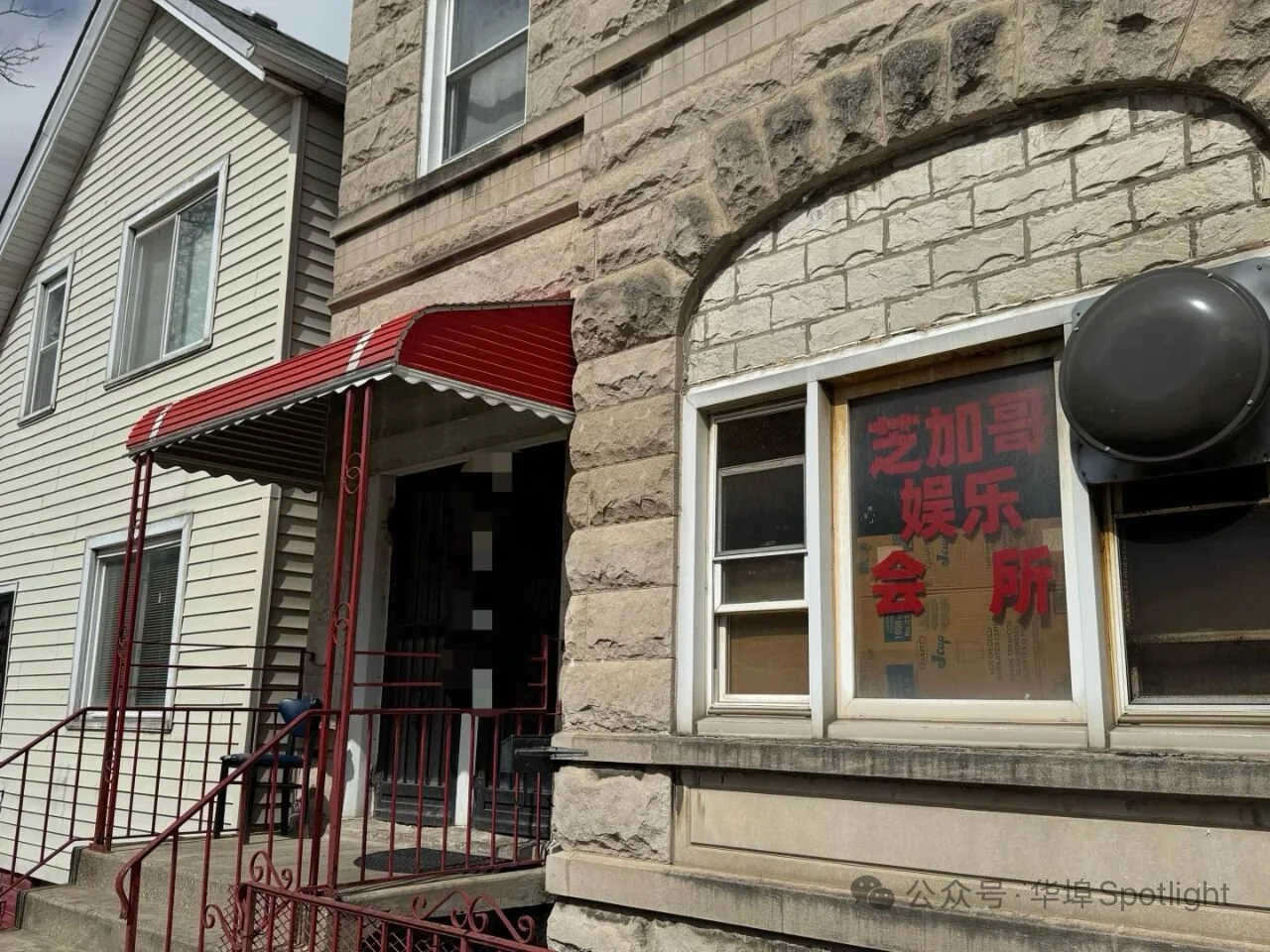
An entertainment club on 23rd Place in Chicago’s Chinatown, with several mahjong tables inside.
Breaking the Silence
“Small bets bring pleasure; big bets bring harm.” In Chinese culture, gambling is often seen as a harmless social and cultural pastime enjoyed by both young and old. Mahjong, considered a national treasure, is viewed as a benign way to relax. Yet gambling is highly addictive, and the line between “small” and “big” bets is often blurred. When restraint turns into addiction, and participation spreads through the community, gambling ceases to be a private matter — it crosses into a public issue that affects family stability, community safety, and even local business development.
Some gamblers have sought help. “Some people feel that treatment doesn’t work,” said Mimi Tsang. “They’ve gone to counseling but didn’t find it effective. We even once received calls asking if we could help them pay off their debts.”
“The response rate is extremely low — very, very low,” said Ms. Liao. “Only a handful of Chinese community members have ever reached out. Once, a family member contacted me, but when we tried to follow up, the person was no longer reachable.” She described the difficulty of doing gambling addiction prevention work in the community. “It takes a long time for people to see results, to realize there’s another path. It’s like the early days of alcohol recovery groups or public housing programs — these resources existed for years before people began to recognize that they could help.”
At present, the field of gambling addiction treatment is still in its infancy, with limited research and few comprehensive, effective models. For community workers, most efforts focus on prevention — monitoring the emotional and psychological state of at-risk individuals, encouraging them to seek help, and promoting alternative activities.
To assist people struggling with gambling problems, the Illinois state government launched the Voluntary Self-Exclusion Program, which allows individuals to voluntarily ban themselves from entering any gambling establishments in the state. Once added to the exclusion list, they are legally barred from participating in gambling anywhere in Illinois. However, in Chicago’s Chinese community, the program’s practical impact has been limited.
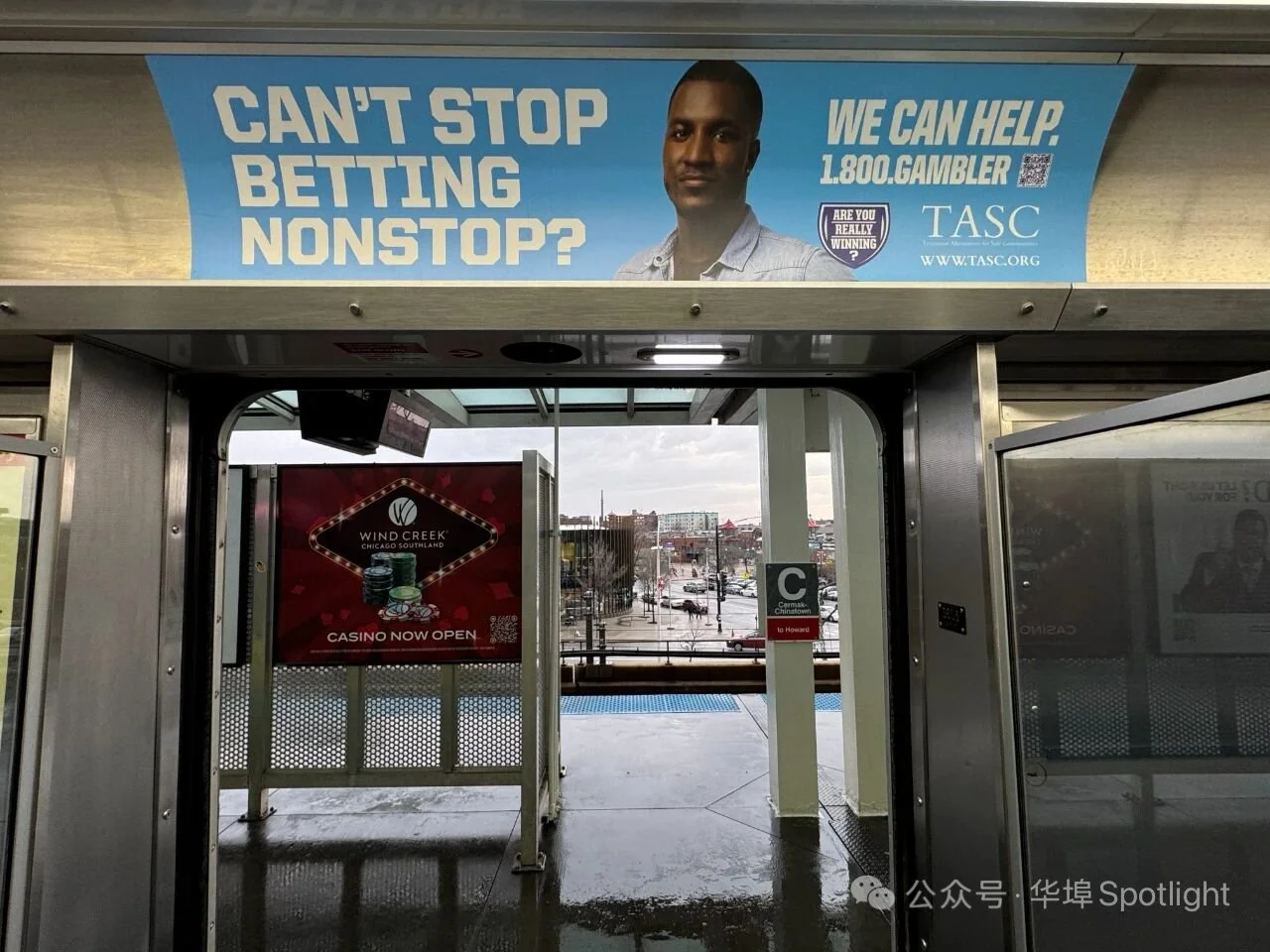
At the Chinatown stop on Chicago’s Red Line, an advertisement for the opening of Wind Creek Casino is displayed inside the station — while inside the train cars, posters warn about the dangers of gambling addiction.
Mimi Tsang said, “We’re trying to find the best approach. But if the person with the problem doesn’t want help, what more can we do? So we’ve expanded our services to include family counseling — helping loved ones cope. Some families come together for support, which is one of the most crucial factors in recovery. Family members are part of the system — they form the environment that person lives in.”
Mrs. Wu’s turning point came after she retired and her husband passed away. “I sat alone at home for hours, thinking it over, and finally decided I’d never go to the casino again.”
“Life is about the same as before — I eat and drink with friends, go out and travel. I’ve basically been to every corner of the world,” she said. Looking back on the decision she made ten years ago, she added, “It was absolutely the right one!”
For Deng Xijian and her community organization, one way to reduce the time people spend in casinos or at mahjong tables is to create more social and recreational opportunities for seniors — such as dance gatherings and group trips. In recent years, Mrs. Wu has become a regular participant in these events and even one of their most active volunteers.
Auntie Ye’s husband was an even heavier gambler than she was. As his habit worsened, she decided something had to change. “I was the one managing our finances. One day, I just stopped. I didn’t pay the electricity bill or anything — I left it all to him, so he could see how many expenses the household really had every month.” It worked: he realized that continuing to gamble would make everyday life unsustainable, and gradually began to stop.
In recent years, the couple has found stability and belonging in a nearby church community.
“When our daughter was a teenager, she suggested that her dad go see a counselor,” Auntie Ye recalled. “At the time, I didn’t understand — I thought, what kind of doctor do you need for this? What’s there to talk about? But now I realize it might have helped. Having a space to express yourself is a good thing.”
Behind the silence lies shame. According to Tsang, education and prevention awareness are key at the community level. “The funny thing is, people often listen more to strangers than to their own families. The best way is to show empathy and understanding — to build a relationship. Listening is so important. Otherwise, it turns into blame. People with gambling problems don’t want to hear that something’s wrong with them. What they’re trying to avoid is exactly what’s happening to them.”
“The same goes for casinos,” she continued. “Instead of trying to push them away, we can work with them — find ways to collaborate and access more resources to raise awareness.” Tsang has even tried reaching out to casinos to place gambling prevention brochures on their shuttle buses. “Casinos don’t actually want people to become addicted — they prefer responsible gamblers. Just like bars don’t want drunk people causing trouble.”
(Names “Amin” and “Xiaojun” are pseudonyms. Some interviewees requested partial anonymity.)
Author: Shu Xi
Master of Public Administration; Senior Manager of Civic Engagement, Coalition for a Better Chinese American Community (CBCAC); Editor of Chinatown Spotlight
Related Articles


For nearly 40 years, Gourmet Food Inc. has been a part of Chinatown residents’ lives.