

A $9 Cantonese-Style Lunch Box and the Twilight of Chinatown’s Traditional Restaurants
By Xizhi, Chinatown Spotlight
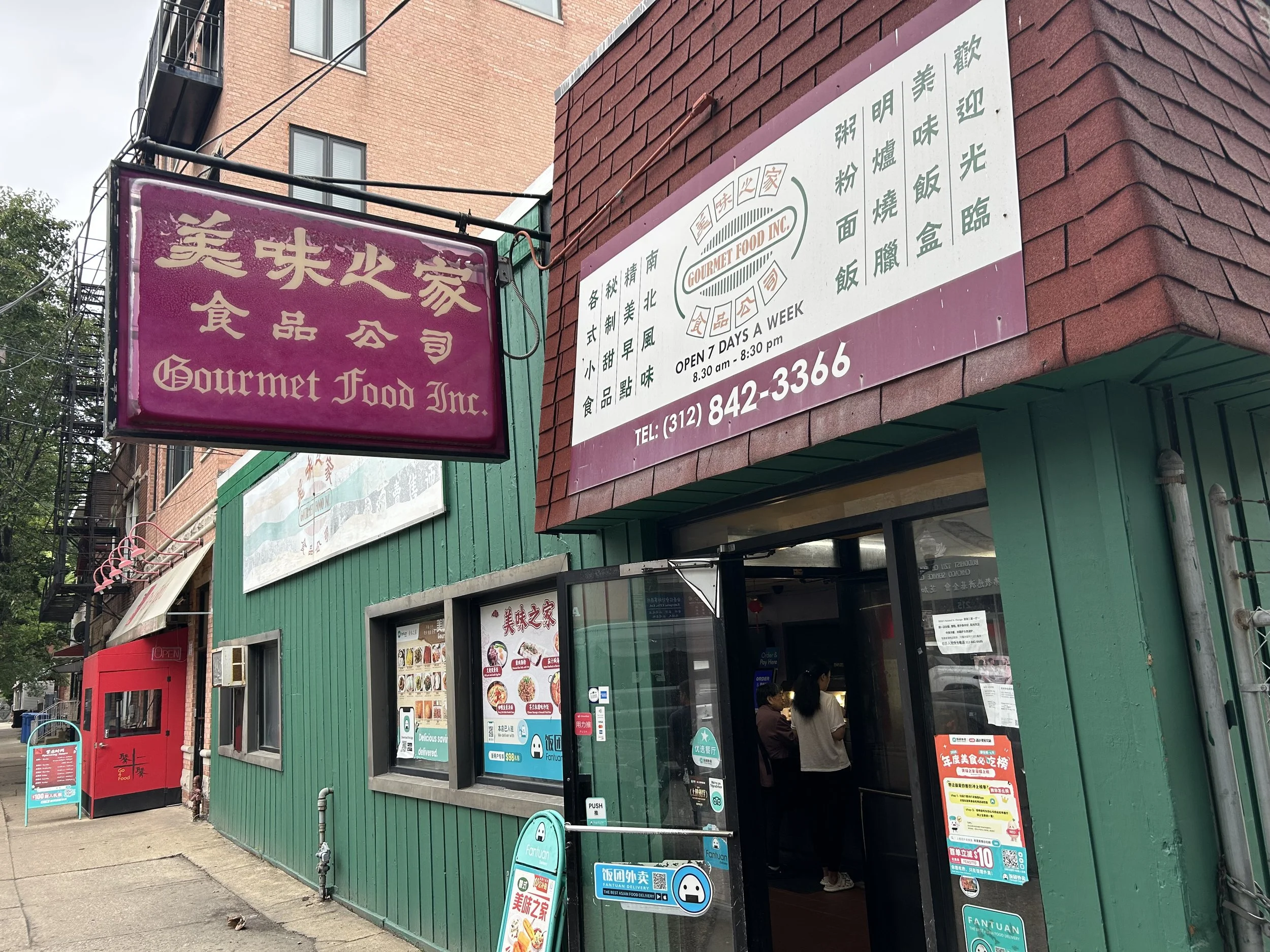
For nearly 40 years, Gourmet Food Inc. has been a part of Chinatown residents’ lives.
Head south on Wentworth Street, turn right at 23rd Street, and push open the door beneath the restaurant’s rose-red sign. On the right, glass display cases are filled with glossy roast chicken, duck, and other Cantonese barbecue meats. On the left, an array of steamed buns and other dim sum sits in a heated display case, sending fragrant wisps of steam into the air.
Honey-glazed char siu sells for $12 a pound; steamed pork ribs with black bean sauce over rice go for $9 a box. The price tags in the window have been crossed out and rewritten time and again. Yet even as prices have soared across Chinatown, the neighborhood has managed to retain its tradition of affordable, no-frills restaurants.
Since opening in 1989, the restaurant has built its business on authentic Cantonese cuisine and inexpensive boxed meals, serving residents, tourists, and office workers three meals a day.
Today, the restaurant’s current owners, a mom-and-pop team in their late sixties, have begun thinking about retirement. With rents skyrocketing and food and labor costs remaining high, Gourmet Food, like many other aging mom-and-pop shops and community restaurants, is facing a difficult question: who will carry it on?
“If they close, I’ll definitely be very sad,” says Craig Wong, who works at the nearby Chinese Christian Union Church (CCUC) and has been a regular at Gourmet Food for the past 30 years. “In recent years, restaurants like Seven Treasures and Tasty Place have closed. It’s hard to run a business now, and the trends have changed.”
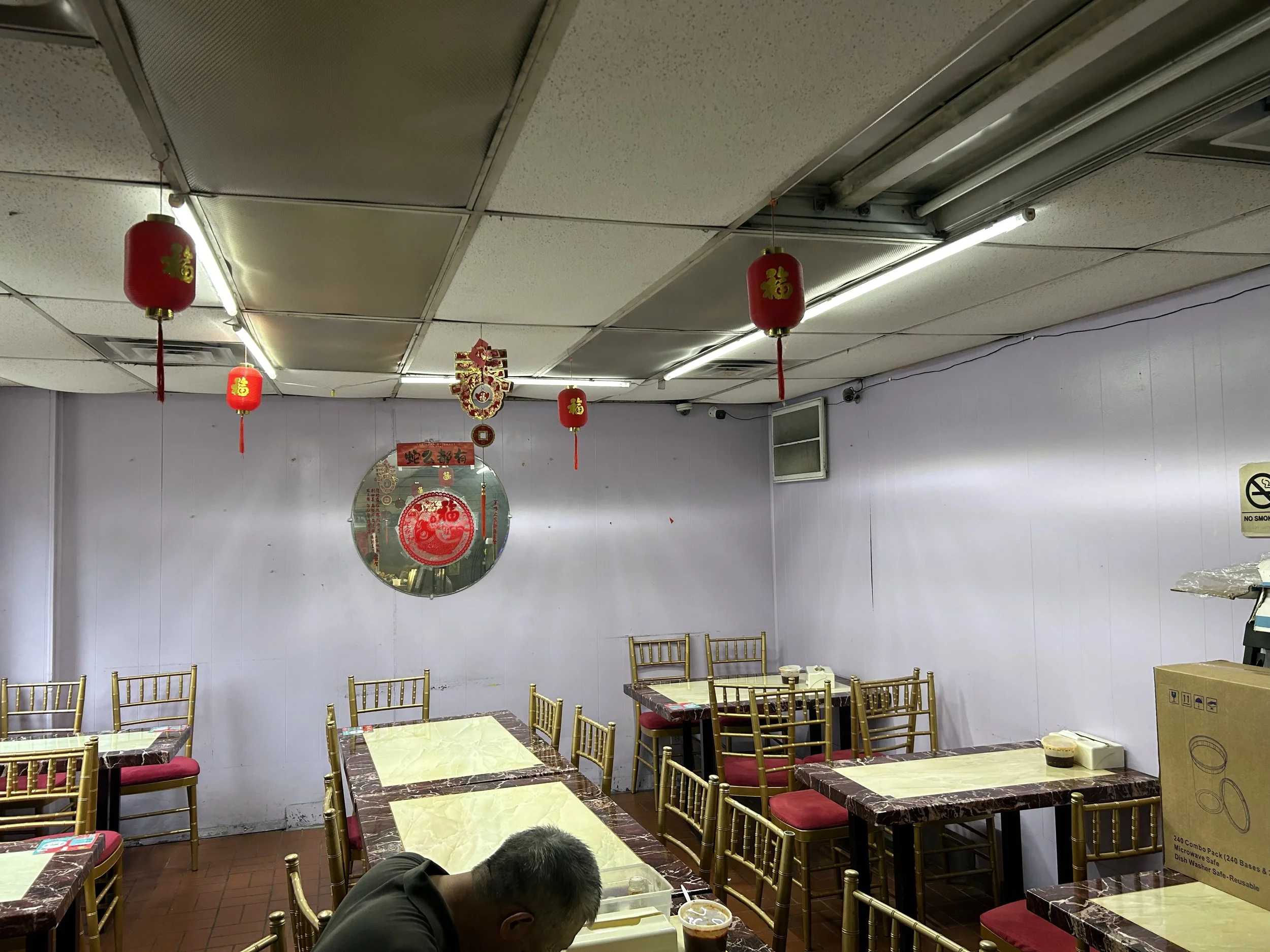
A corner of Gourmet Food
From Chinatown Spotlight
In the 1980s, Chinese dining in Chinatown was dominated by traditional banquet restaurants. Cantonese establishments such as Three Happiness, Triple Crown, and Won Kow Restaurant served family-style meals and hosted all kinds of banquets. But for ordinary office workers, convenient, affordable, and filling options for breakfast and lunch were in short supply.
Gourmet Food was among the first restaurants to bring Hong Kong’s culture of affordable boxed meals to Chicago’s Chinatown.
A generous portion of white rice topped with two dishes of the customer’s choice, all at an accessible price—business at the restaurant quickly took off. “When we first started, a box was only $3,” the owner recalls. At the time, the kitchen had to cook rice in ten rice cookers at once just to keep up with orders.
“It was mainly about convenience, and the portions were generous. When I come here, I usually stick to my ‘three classics’: minced beef over rice, fish fillet with Chinese broccoli over rice, and dry-fried beef chow fun,” Wong says.
As a longtime customer, Wong is quite particular about the chefs’ cooking. “Consistency is the most important thing. When my family and I eat at restaurants in Chinatown, we can immediately tell if the food tastes different. We ask, and sure enough, the chef has been replaced.”
Mr. Tan, the owner of Gourmet Food, comes from a family with deep roots in Cantonese cuisine. His father worked as a manager at the Canton Catering Company as early as the 1950s. Before coming to the United States, Mr. Tan himself worked as a chef at the renowned Garden Restaurant in Taishan, where he also taught aspiring cooks.
After immigrating to the United States on a labor visa in 1994, he first worked as a kitchen assistant at Chinatown restaurants including Gourmet Food and Three Happiness. He later ran a chop suey restaurant in the suburbs.
In 2003, when Gourmet Food was on the verge of closing after being hit hard by the SARS epidemic, the Tans decided to take over the restaurant. With their commitment to authentic Cantonese cooking and careful management, they brought the small restaurant back from the brink.
“Many of our dishes are still prepared using traditional Cantonese methods that have been passed down since the 1980s,” Mr. Tan says. “Things like steamed pork ribs with black bean sauce, minced beef over rice, scallion oil chicken, and Siu Mei (Cantonese-style barbecue). We don’t follow the newer, contemporary style of Cantonese cuisine that has become popular today.”
Mrs. Tan explains that traditional preparation methods can sometimes be more costly. “Take our roast duck, for example. Some restaurants now use additives and food coloring to make the duck look glossier and more flavorful. But we marinate our roast duck slowly in a traditional sauce, which takes more time and effort. But this is how we can stay true to our conscience.”
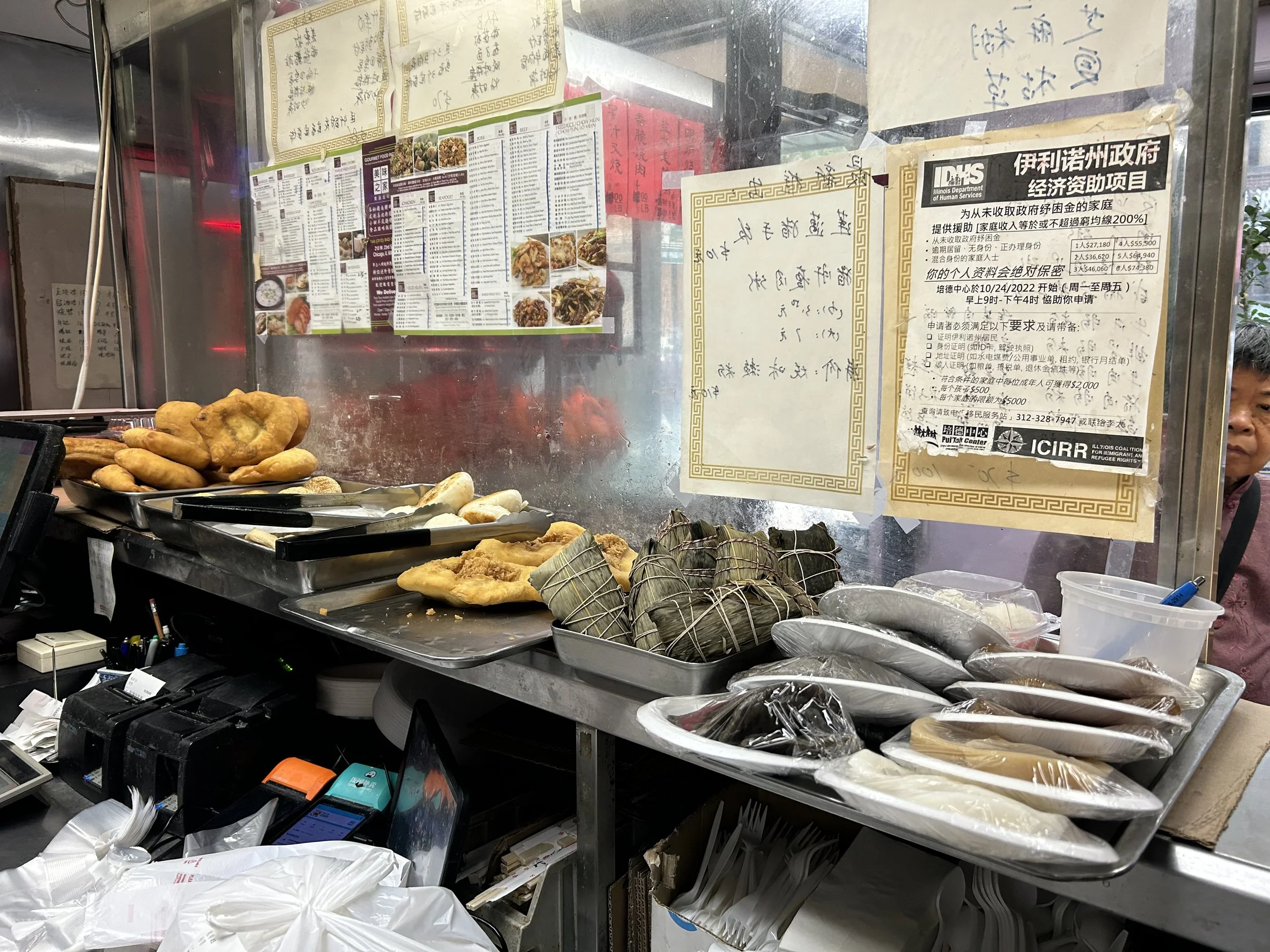
Gourmet Food has plenty of breakfast options
Source: Chinatown Spotlight
Still, preserving the traditions of Cantonese cuisine does not mean refusing to change with the times. Around 2010, immigrants from regions of China outside Guangdong began moving to Chicago from places like New York, and northern Chinese breakfast staples such as youtiao (fried dough sticks), soy milk, steamed buns, and chive pockets quietly began appearing at Gourmet Food’s breakfast counter.
“At first, we weren’t very familiar with northern Chinese cuisine either,” Mrs. Tan recalls. “Some of our northern customers gradually taught us how to make it, including how the fillings for the steamed buns should be prepared.” Whenever the couple traveled back to China to visit family, they didn’t simply take time off—they also visited restaurants in different places to learn new dishes and hone their skills as restaurateurs.
“At the peak of our business, there would be long lines every day at lunchtime just to pick up orders,” Mrs. Tan says.
That heyday has been gone since the COVID-19 pandemic began in 2020.
The most significant change has been the sharp rise in rent and food prices. “If we sell $100 worth of food, $60 goes toward the cost of ingredients. Then we still have to pay wages, rent, and other expenses. It’s very difficult to make money now,” says Mrs. Tan.
At the same time, newer dining trends, from hot pot restaurants to bubble tea shops, are changing people’s tastes, while Chinatown has welcomed more diverse restaurant concepts and international chain brands. Last year, federal immigration enforcement actions made an already difficult situation even worse. “People didn’t even dare to go outside,” Mrs. Tan says.
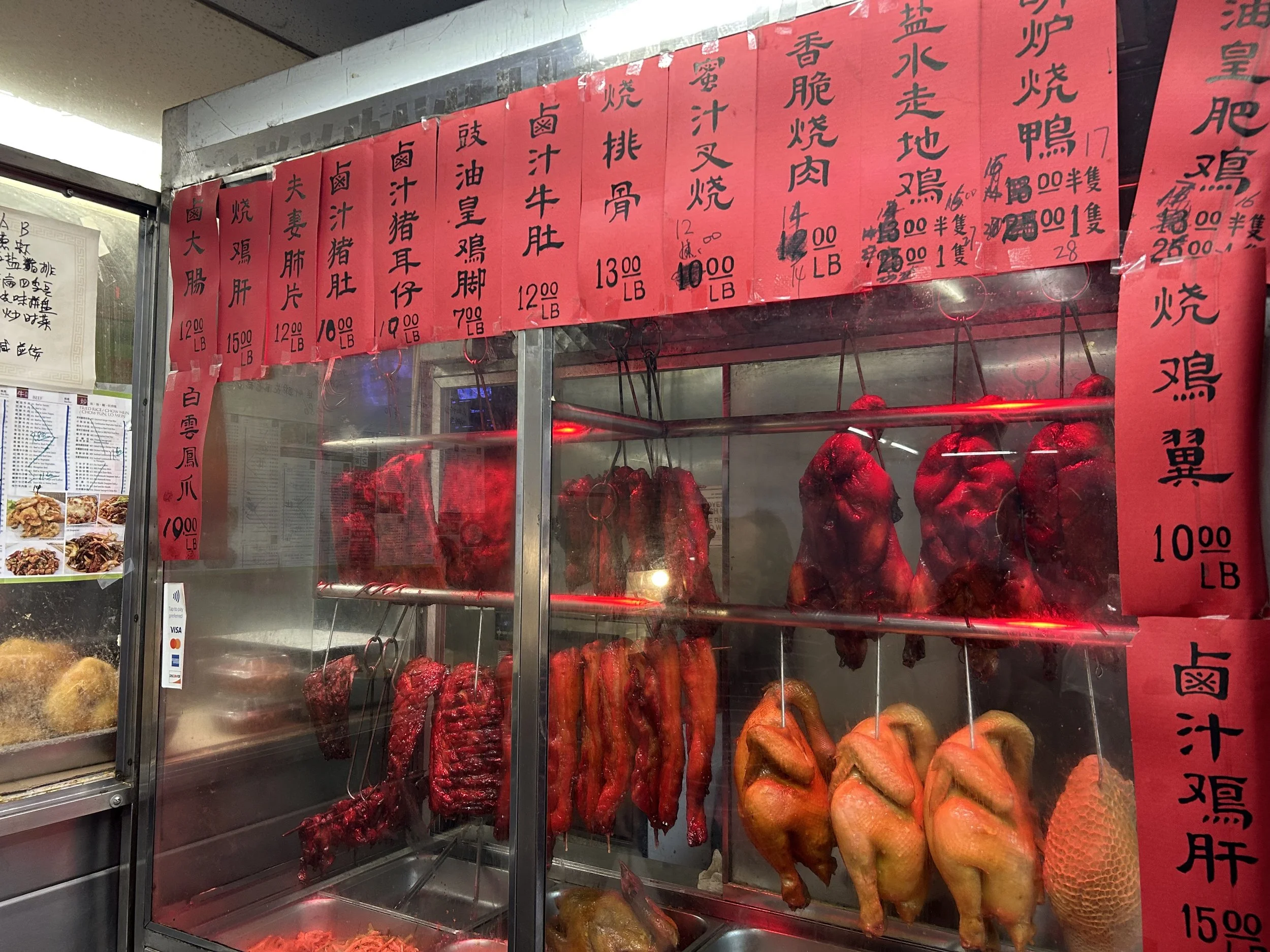
Gourmet Food invites the senior calligraphers from Chinese American Service League (CASL)’s CASL Senior Services Center to write their traditional Chinese price tags.
Source: Chinatown Spotlight
The Tans have tried to weather these pressures by raising its prices modestly. For example, the price of a standard two-item combo box has risen from $7–8 to $9–10. But even that has only been enough to keep the restaurant afloat, with an extremely narrow profit margin.
Mr. Tan is even more concerned about finding someone to carry on the traditional skills of Cantonese cooking. “Young people nowadays want to learn things quickly. It’s hard for them to slow down and really learn the craft of cooking.”
“I’m willing to teach every cooking technique behind every dish we make to any young person who wants to learn,” Mrs. Tan says. “Most importantly, the cultural traditions of Chinese cuisine need to be passed down and preserved.”
Although the couple had been considering retirement for some time, they have continued on—partly to take care of the employees who work at the restaurant, and partly in the hope of finding someone willing to take over and run the business with the same care. Seven days a week, from 7:30 a.m. to 7:30 p.m., the little restaurant’s lights remain on.
For longtime customer Wong, “These traditional food cultures will survive in different forms. They may change the way they are presented, or they may move to another restaurant, but they will always be there.”
Just then, his lunch box was ready. Wong got up and walked to the counter, took the box from the woman behind the register, waved goodbye, and headed out the door. Over more than three decades, he has lost count of how many times he has repeated this same sequence of motions. Countless Chinatown diners like Wong have passed through the little door on 23rd Street.