

Story of a Chinatown Leader Told in Love Letters
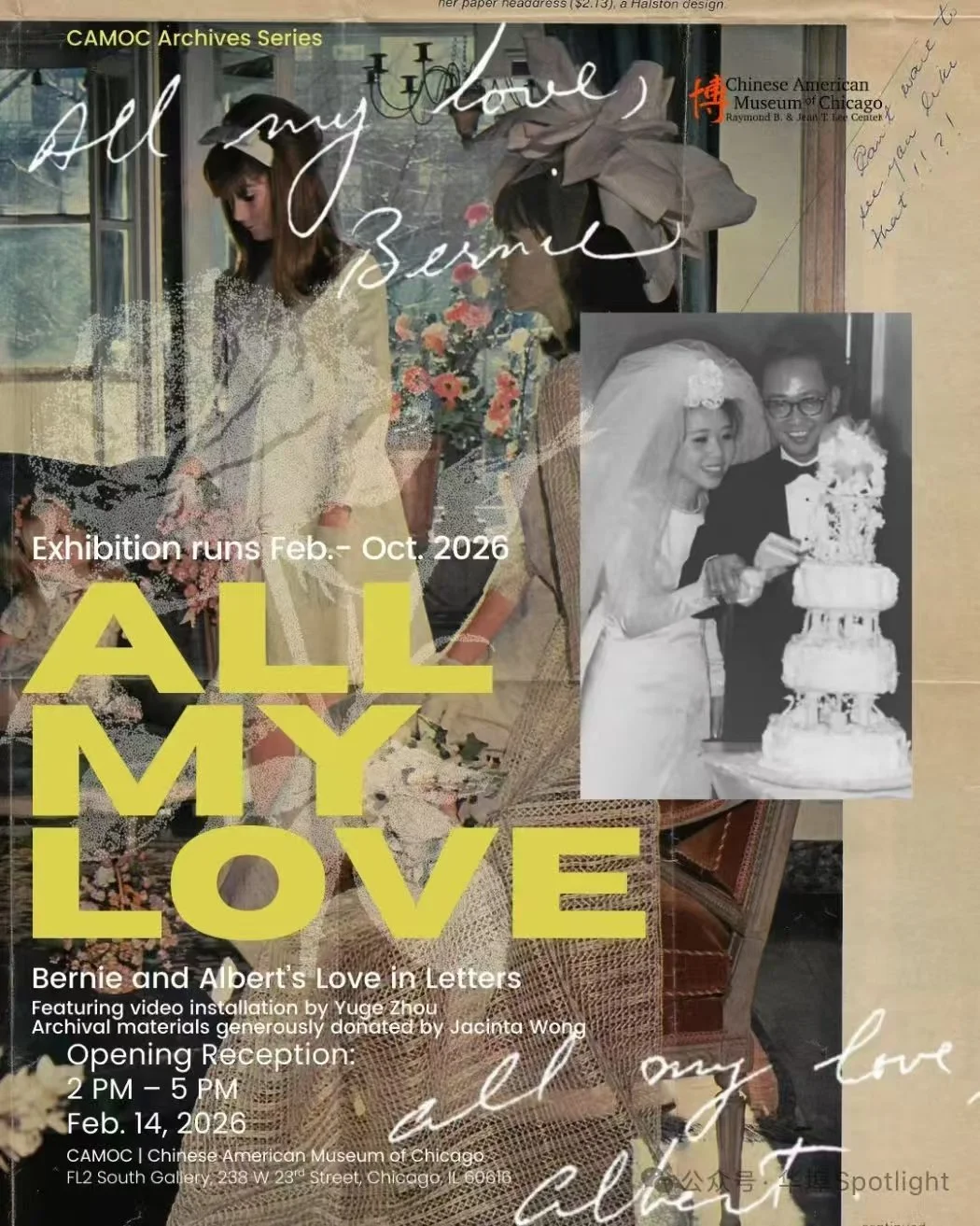
Chinese American Museum of Chicago (CAMOC) is exhibiting letters written by the late founders of Chinese American Service League between February and October. The image shows the event poster.
Courtesy of CAMOC
Five years ago, Jacinta Wong discovered a box containing nearly 300 old letters while sorting through her late mother’s belongings. When she looked more closely, she realized they were love letters written more than half a century ago by her parents—Bernarda “Bernie” Lo Wong and Albert Wong.
At that time, they were newly arrived immigrants from Hong Kong studying in the Midwest.
About 10 years later, Bernie Wong founded the Chinese American Service League (CASL), which became one of the most well-known social service organizations serving Chinese and Asian communities in Chicago.
“They had always been kept in my mother’s closet. When she was ill, she would take them out—she was undergoing cancer treatment at the time,” Jacinta Wong said. “Because I’m their daughter, I didn’t really want to read these letters at first.” She eventually decided to donate this valuable collection to the Chinese American Museum of Chicago (CAMOC) in Chinatown so that the letters could “be properly preserved.”
On Valentine’s Day, the museum officially opened the exhibition “All My Love: A Couple’s Love Letters from the 1960s — Exploring Immigrant Life and Daily Living in the American Midwest.” The exhibit highlights the deep affection shared by the couple. At the opening event, Jacinta Wong and members of her family, along with several longtime friends who had known Bernie Wong for decades, came to share their reflections with visitors. The exhibition will run through October 14.
Located on the museum’s second floor, the exhibition is divided into 10 sections that trace the couple’s emotional journey since the late 1960s. Visitors can browse enlarged reproductions and transcripts of the love letters, which document the couple’s long-distance relationship while they attended college in Chicago and St. Louis, and continue through the period after their marriage when they were searching for a new home together.
All of the correspondence was written in English. In September 1966, Albert Wong wrote to Bernie Wong: “If you didn’t tell me that you strongly preferred English letters, I dared not write in English at all. As it turns out, I truly enjoy writing in English——but only love letters.”
The exhibition also displays framed original letters, old photographs of the couple, and historical artifacts—such as a Greyhound bus timetable from the era showing routes between Chicago and St. Louis. Visitors can even listen to a playlist of love songs the couple used to hum.
These letters offer a glimpse into the lives of young Chinese immigrants in the United States at that time. Each letter ends with the phrase “All My Love.” Some letters also discuss their concerns about the financial realities of marriage and Albert Wong’s ideas about what makes a “good wife.”
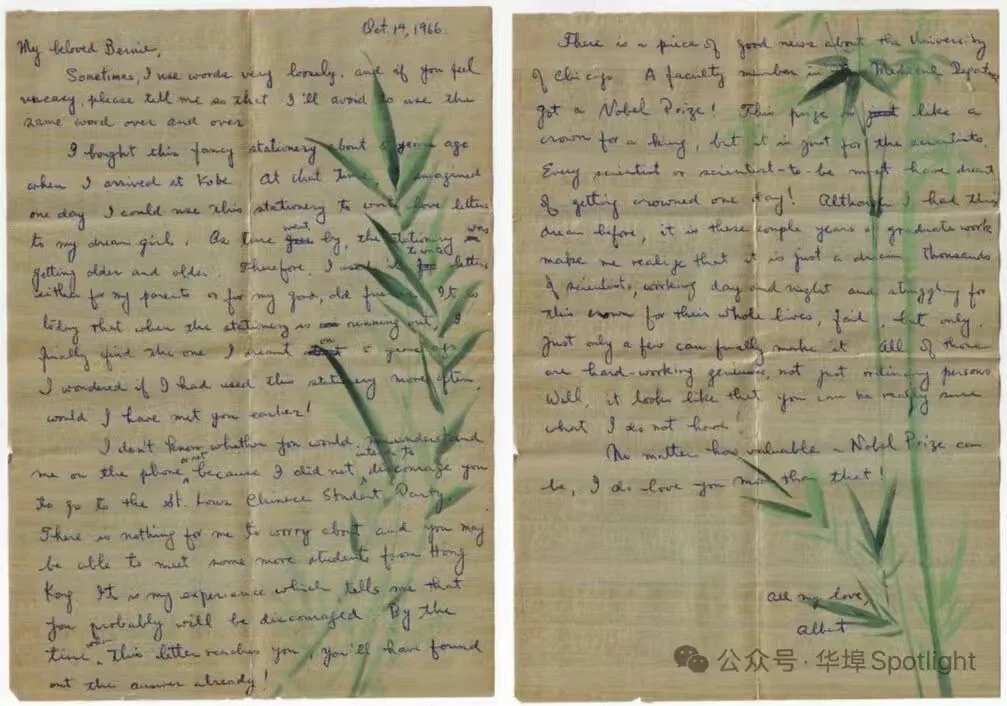
A handwritten letter from Albert Wong to Bernie Wong.
Compliments of CAMOC
Yiwei Wang, who was responsible for designing and curating the exhibition, said the different ways the letters are displayed are meant to recreate the experience of the Wongs reading the letters page after page. He added that the exhibition layout aims to show “the life cycle of a love letter,” from the moment the idea of writing a letter emerges, to the act of writing it, and finally to the delivery.
“Then you open the letter and begin reading it, over and over again,” Wang said. “Eventually you treasure it in a box, preserving it in your heart. Those are all the stages of a love letter, and I find that incredibly powerful and deeply moving.”
Like many other Chinese immigrants, Bernie Wong and Albert Wong first came to the United States as college students. According to the exhibition materials, they were part of the wave of immigrants who arrived after the Immigration and Nationality Act of 1965, which lifted restrictions on immigration from China and other non-Western European countries.
After completing her master’s degree at Washington University in St. Louis, Bernie Wong became a social worker. According to the Chinese American Service League’s website, she and a group of friends began providing translation, tax assistance, and other services to neighbors in 1978. A year later, they officially established the nonprofit organization in Chicago.
Over the following 40 years, the organization provided a wide range of services to Chinese residents in Chinatown and many other people on Chicago’s South Side, including immigration assistance, employment counseling, mental health services, legal aid, and more. According to its annual impact report, in fiscal year 2024 the organization served about 7,000 people, most of whom were seniors aged 50 and above.
Caroline Ng, the museum’s director, said she hopes visitors will learn from the exhibition that the story of Chinese Americans is “not only about hardship, sacrifice, hard work, pain, and exclusion,” but there are also “moments of happiness, tenderness, and the experience of savoring life and sharing it with the people we love.”
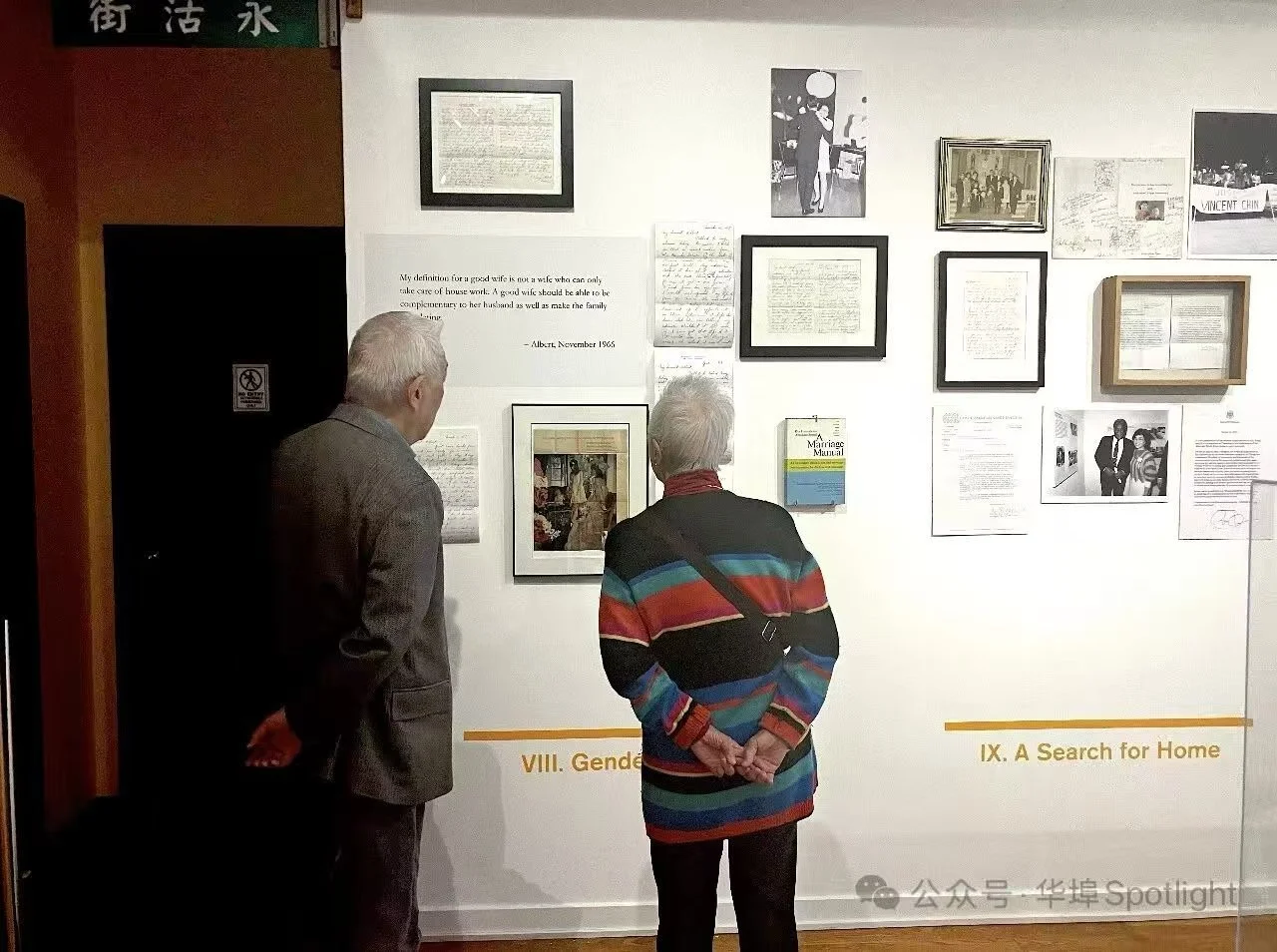
Bernie Wong’s longtime friends visit the exhibition at the museum. Mavis Chan / Chinatown Spotlight
For museum volunteer and visitor Weibao Cen, the exhibition resonated deeply with her. She previously worked for Bernie Wong at the Chinese American Service League (CASL) and had known the couple for more than a decade. Although she knew Bernie Wong mostly through work, Shen felt the letters gave her a deeper understanding of her former boss before she became well known.
“The relationship between them was really deep,” Shen said. “When she was young, she certainly didn’t imagine that CASL would grow to become what it is today. She built everything up step by step.”
The part of the exhibition that moved her the most was the young couple’s pining for each other during their long-distance relationship in an era without video calls or instant messaging.
“You can really feel how much they longed to see each other,” Cen said.
Author: Marvis Chan
Reporter of Chinatown Spotlight
Related Articles
For nearly 40 years, Gourmet Food Inc. has been a part of Chinatown residents’ lives.